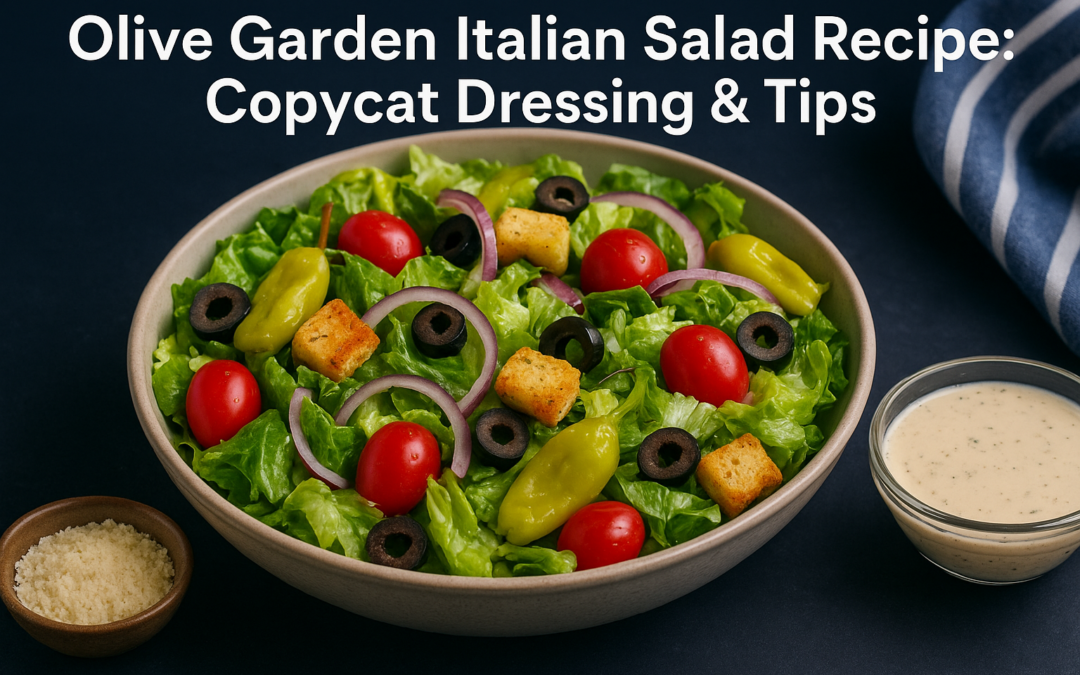
That iconic salad you get before your entree at Olive Garden? It’s arguably more famous than anything else on their menu. The olive garden Italian salad recipe has sparked a massive copycat movement, and for good reason. The combination of crisp lettuce, tangy pepperoncini, briny olives, and that unmistakable zesty dressing makes it one of the most craveable chain restaurant dishes out there.
At La Dolce Vita Cucina, our kitchen in Chicago’s Portage Park neighborhood works with Italian flavors every single day. We know what makes a great Italian salad tick, the balance of acid, salt, herbs, and quality ingredients. That hands-on experience is exactly what we’re bringing to this breakdown of the classic Olive Garden salad, so you can nail it at home whenever the craving hits.
Below, you’ll find the full recipe for both the salad and the signature dressing, along with tips to get the flavor as close to the original as possible. We’ll also cover ingredient swaps, storage advice, and a few techniques we use in our own kitchen that’ll take your version up a notch.
What makes this salad taste like Olive Garden
Before you start shopping or chopping, it helps to understand what actually drives the flavor of this salad. Most copycat attempts fall flat because people treat it like a generic Italian salad. The Olive Garden version has a very specific flavor profile built on a few key decisions, and once you know what those are, replicating it at home becomes much more straightforward.
The dressing is the anchor
The dressing is what separates this salad from any other Italian-style salad you’ve had. Olive Garden’s signature dressing is creamy, tangy, and slightly sweet, built on a base of oil, red wine vinegar, and a blend of Italian herbs. The creaminess comes from a small amount of mayonnaise, not cream or dairy. Romano cheese adds a sharp, salty bite that rounds out the vinegar. Most store-bought Italian dressings skip that combination, which is why they never taste quite right.
The ratio of oil to vinegar is critical here. Olive Garden’s dressing leans more acidic than most, which is a big part of what makes it so sharp and addictive.
Another thing to know is that the recipe uses dried oregano and garlic powder, not fresh herbs. Fresh herbs give a brighter flavor, but dried produces that more muted, consistent taste you get at the restaurant. A small amount of sugar or honey balances the acid without making the dressing sweet. You need all of these elements working together.
The salad mix and toppings matter too
The greens in this olive garden Italian salad recipe are not just romaine. Olive Garden uses a romaine and iceberg blend, which keeps the salad crunchy and lighter in flavor overall. That combination holds up to the dressing far better than romaine alone, and the texture contrast is part of what makes each forkful satisfying.
Your toppings follow a very specific formula. You need pepperoncini peppers, black olives, red onion, grape tomatoes, and croutons. Each one plays a role in building the final flavor. Pepperoncini adds heat and brine, olives add richness, and croutons soak up the dressing without going soggy right away. Missing any one of these changes the overall balance noticeably.
Step 1. Choose the right ingredients and prep them
Getting the ingredients right before you start anything else is the most important step in this whole process. The olive garden Italian salad recipe depends on a specific set of components, and using the wrong substitutes, or skipping the prep work, leads to a salad that looks similar but doesn’t eat the same way.
The salad ingredients you need
You’ll need the following items to build the base correctly:
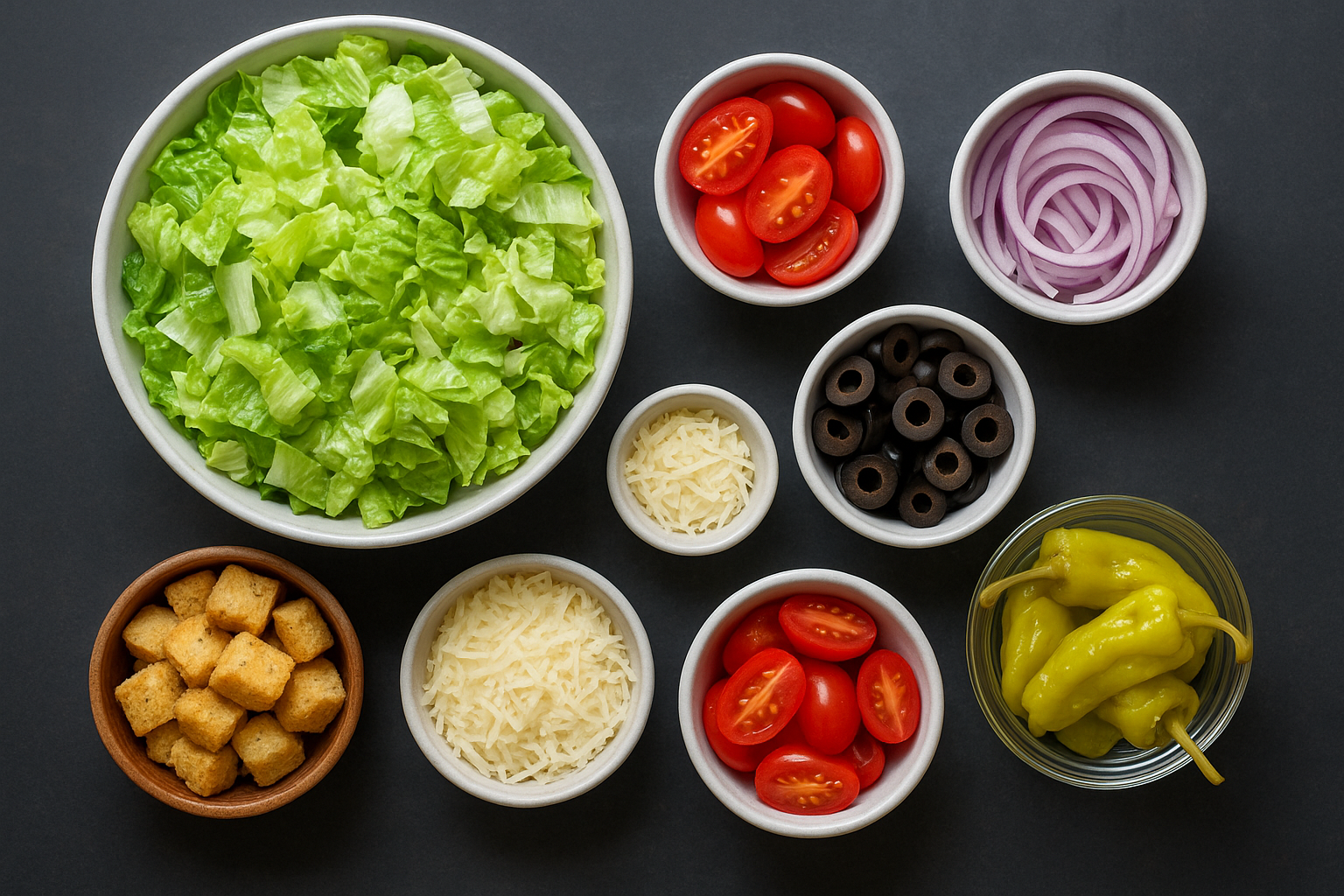
- Romaine and iceberg lettuce (roughly a 50/50 blend), chopped into bite-sized pieces
- Grape tomatoes, halved
- Thinly sliced red onion
- Whole pepperoncini peppers (jarred, not fresh)
- Sliced black olives (canned work perfectly here)
- Croutons (Italian-seasoned, store-bought or homemade)
- Shredded Parmesan or Romano cheese
Using whole pepperoncini rather than sliced ones gives you more control over the heat level, since you can eat around them or bite in directly.
How to prep the vegetables before you toss
Dry your lettuce thoroughly after washing it. Any excess moisture dilutes the dressing and makes the salad watery within minutes. Spin the greens in a salad spinner and then pat them with a paper towel if needed.
Slice your red onion as thin as possible, ideally on a mandoline or with a sharp knife. Thick onion slices overpower every other flavor in the bowl. Halve the tomatoes right before assembly so they don’t release extra juice into the mix ahead of time.
Step 2. Make the copycat creamy Italian dressing
The dressing is where the olive garden Italian salad recipe really lives or dies. Get this right and the whole salad snaps into place. The proportions below produce about ¾ cup of dressing, which is enough for a full family-sized salad with a little left over.
The dressing ingredients
Measure everything before you start mixing. Having your ingredients pre-measured and ready keeps you from over-pouring and throwing off the balance.
- ½ cup olive oil
- 3 tablespoons red wine vinegar
- 1 tablespoon mayonnaise
- 1 teaspoon grated Romano cheese
- ½ teaspoon dried Italian seasoning
- ½ teaspoon garlic powder
- ½ teaspoon sugar
- ¼ teaspoon dried oregano
- Salt and black pepper to taste
How to mix and adjust the dressing
Add the mayonnaise and red wine vinegar to a small bowl or jar first and whisk them together until fully combined. Then slowly drizzle in the olive oil while whisking continuously. This order matters because it helps the mayo emulsify the oil and vinegar rather than letting them separate into two distinct layers.
If your dressing tastes too sharp after mixing, add a small pinch of sugar. If it tastes flat, add a few more drops of red wine vinegar.
Once everything is combined, stir in the dried herbs, garlic powder, and Romano cheese, then season with salt and pepper. Taste it with a piece of lettuce rather than a spoon, because the greens change how the flavors register. Refrigerate the dressing for at least 15 minutes before using it so the dried herbs hydrate and the flavors fully blend together.
Step 3. Assemble, toss, and serve like the restaurant
Assembly isn’t just dumping everything into a bowl. The order you layer your components and how you toss them directly shapes how the salad tastes and looks. Following the method Olive Garden uses is what gets you that consistent, well-coated result every single time.
Build the bowl in the right order
Start with your chilled, dried lettuce blend at the bottom of a large, wide bowl. You want enough room to toss without losing ingredients over the sides. Layer your toppings on top of the greens in this order before you toss anything:
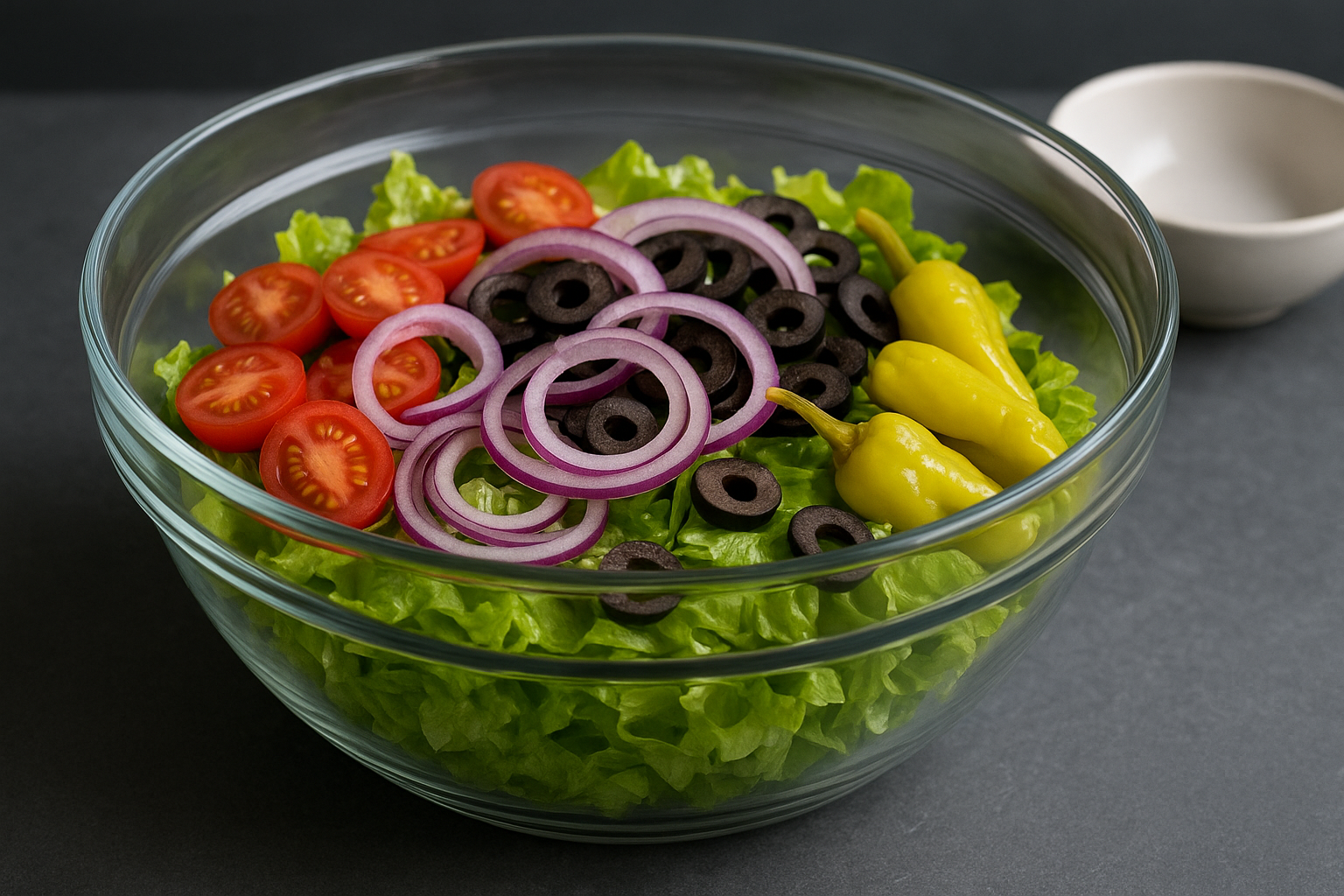
- Halved grape tomatoes
- Thinly sliced red onion
- Sliced black olives
- Whole pepperoncini peppers
Adding toppings this way ensures even distribution throughout the bowl rather than having everything cluster at the bottom during the toss.
Chill your mixing bowl in the refrigerator for 10 minutes before assembly to keep the lettuce crisp longer.
Toss and serve immediately
Drizzle two-thirds of your prepared dressing over the assembled salad first. Toss using tongs or two large spoons, lifting from the bottom and folding over the top. Check the coating on the leaves and add more dressing in small increments if needed. Never pour the full amount at once because over-dressing is the most common mistake people make with this olive garden Italian salad recipe.
Plate the salad immediately after tossing, then finish with croutons and grated Romano cheese right before serving. Tossing the croutons in with everything else crushes them and makes them soggy fast.
Troubleshooting, make-ahead, and storage
Even a well-executed olive garden Italian salad recipe can run into a few issues. Knowing what to fix and when to prep each component saves you from serving a soggy or underdressed salad when it matters most.
Fix common problems before they ruin the salad
The two most frequent problems are a watery salad and a dressing that won’t hold together. Wateriness almost always comes from wet lettuce or tomatoes that sat too long after being halved. Always dry your greens completely and halve the tomatoes right before tossing. If your dressing separates in the jar, give it a quick shake or 15-second whisk before pouring; the mayo will re-emulsify it fast.
If your dressing tastes bland after refrigerating, let it sit at room temperature for five minutes and add a small pinch of salt before serving.
Store and prep ahead without losing quality
Prepping components separately is the smartest make-ahead approach for this salad. Store your mixed and dried lettuce in an airtight container lined with paper towels, which absorbs moisture and keeps the greens crisp for up to two days in the refrigerator. Keep all toppings in separate sealed containers and only combine everything right before serving.
Your prepared dressing stores well for up to a week in a sealed jar in the refrigerator. Never store an already-dressed salad since the greens wilt within an hour and the croutons turn completely soft. Keep the dressing separate and toss only the portion you plan to eat right away.
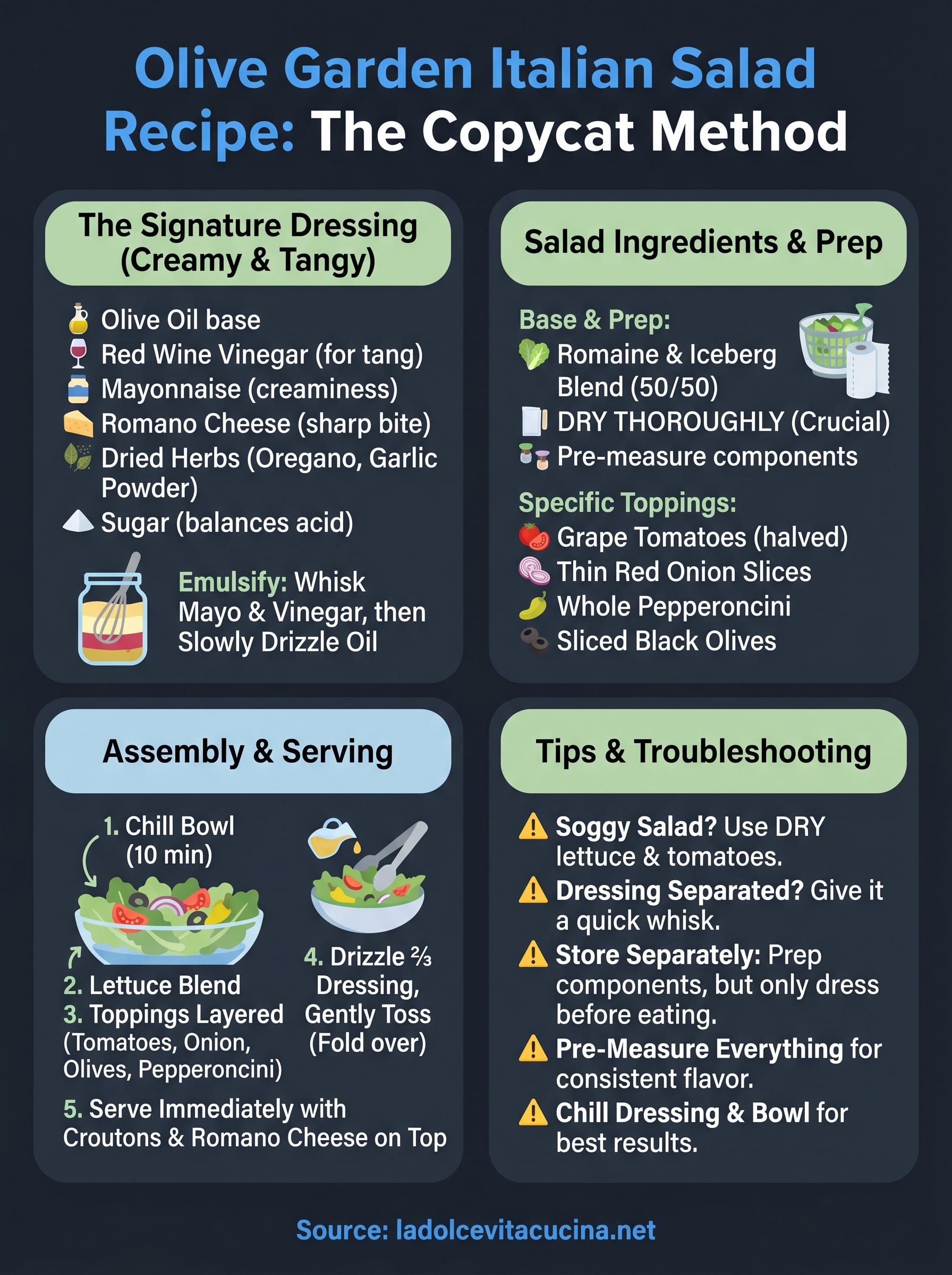
Final notes and next steps
This olive garden Italian salad recipe comes down to a handful of decisions done right: dry greens, the correct lettuce blend, properly emulsified dressing, and toppings added in the right order. Every step in this guide connects back to those fundamentals. Skip one and the whole thing shifts, but follow the process and you get a salad that tastes remarkably close to what you’d get at the restaurant.
Now that you have a solid recipe locked in, the next logical step is pairing it with something worth serving alongside. A great Italian salad deserves equally good food on the same table. If you want to experience what thoughtfully prepared Italian cooking looks and tastes like in person, come visit us at La Dolce Vita Cucina in Chicago’s Portage Park neighborhood. Our kitchen puts the same care into every dish that this recipe asks of you at home.