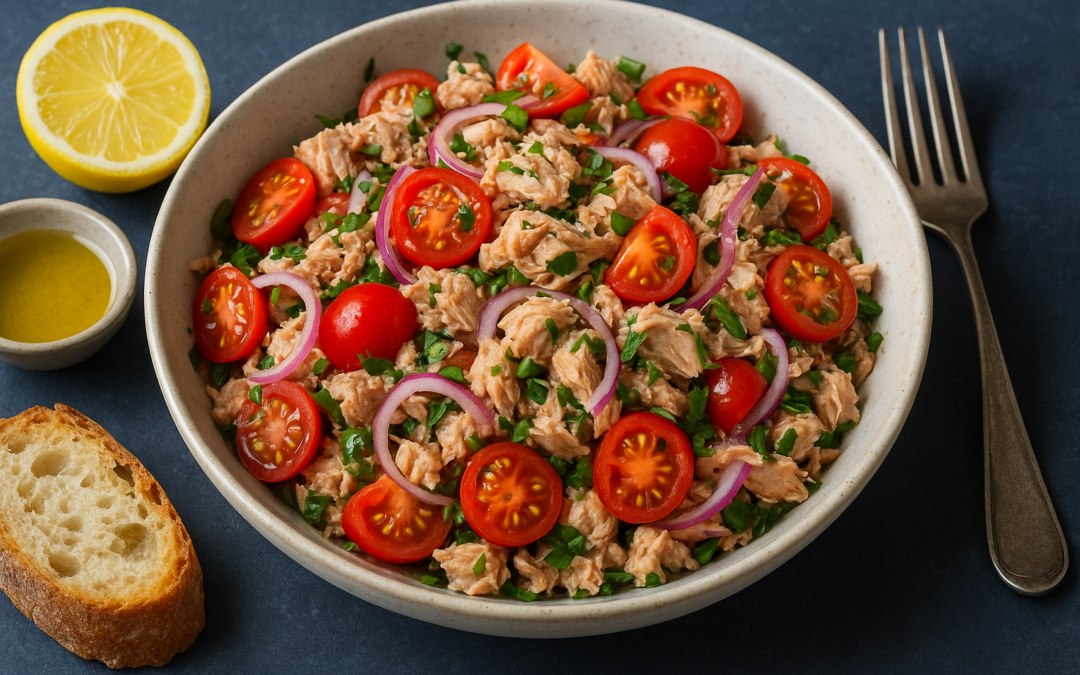
At La Dolce Vita Cucina in Chicago’s Portage Park neighborhood, we build our dishes on a simple principle: quality ingredients don’t need much fussing. That philosophy shows up across our menu, and it’s exactly what makes a proper Italian tuna salad recipe so good. Forget the heavy, mayo-laden versions you grew up with. The Italian approach strips things back to olive oil, fresh lemon juice, crisp vegetables, and quality canned tuna. It’s lighter, brighter, and comes together in about ten minutes.
This style of tuna salad is a staple across Italy, from Rome to Sicily. You’ll find versions of it in trattorias, packed into panini, or served as part of an antipasto spread. The beauty is in the Mediterranean pantry staples doing the heavy lifting, good extra virgin olive oil, a squeeze of lemon, maybe some capers or red onion. No mayonnaise required. The result is a salad that actually tastes like something, with each ingredient pulling its weight.
In this guide, we’re sharing our approach to making Italian tuna salad at home. We’ll walk you through ingredient selection, preparation steps, and variations so you can adapt it to whatever you have on hand. Whether you’re looking for a fast weekday lunch or a protein-rich dish that won’t weigh you down, this recipe delivers on both flavor and simplicity.
What makes Italian tuna salad different
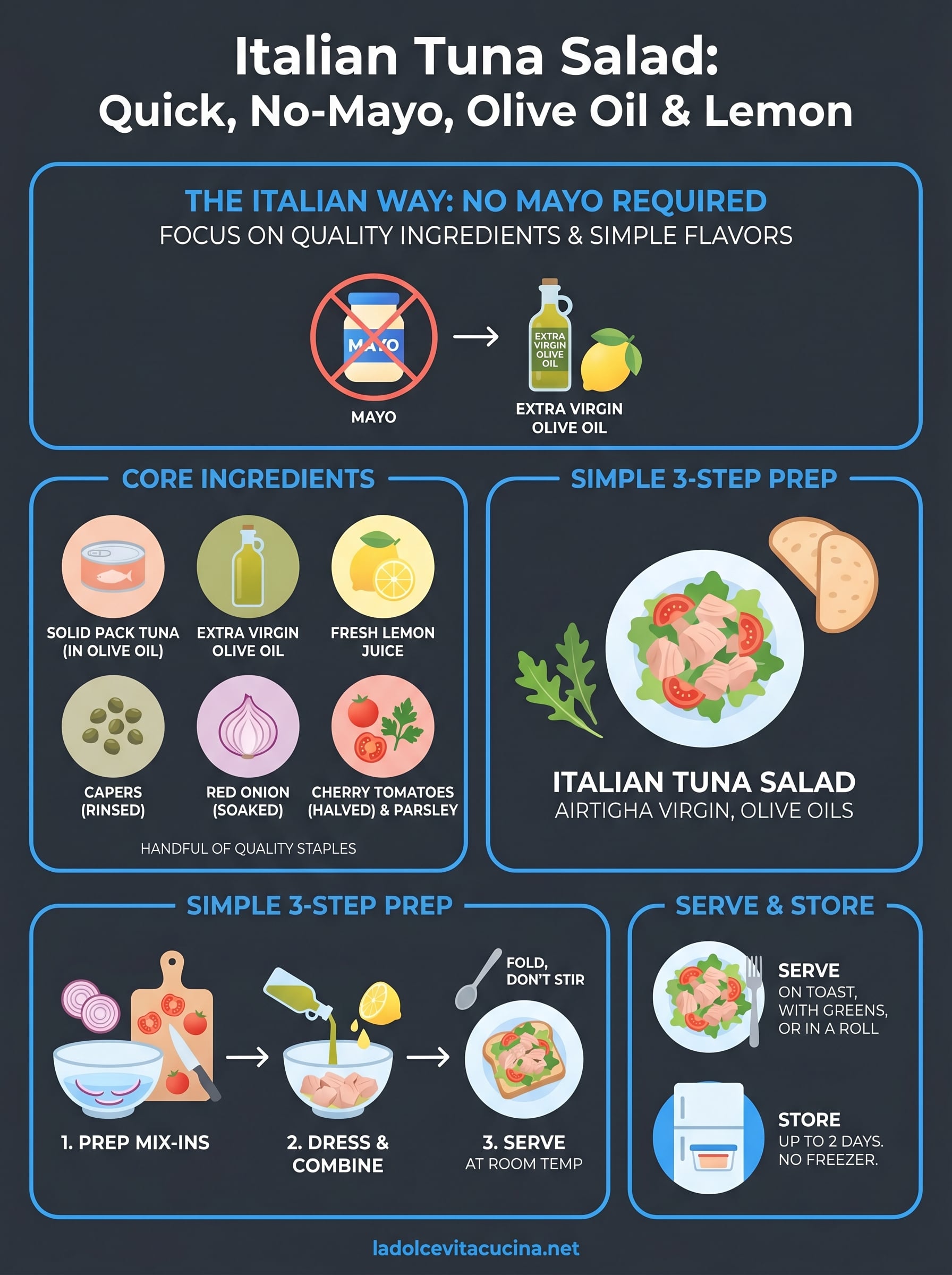
The biggest difference comes down to fat and acid. American tuna salad uses mayonnaise as its base, which creates a thick, creamy texture that coats everything. Italian tuna salad uses extra virgin olive oil and lemon juice instead. That swap changes the entire character of the dish. You get a clean, bright flavor profile rather than a heavy, muted one. The tuna stays at the center, and the other ingredients complement it rather than disappear into a white sauce.
The Italian approach treats tuna as the main ingredient, not something to hide inside a binding sauce.
It starts with how Italians think about canned fish
In Italy, canned tuna is not a compromise ingredient. It’s considered quality pantry food, something worth eating with minimal preparation. Italian producers often pack yellowfin or albacore tuna in high-quality olive oil, which gives you a firm texture and a clean, briny flavor from the start. When you build your italian tuna salad recipe from this base, you’re already ahead before you add a single other ingredient.
Your choice of tuna shapes the entire dish. Look for tuna packed in olive oil rather than water, and check that it’s solid pack rather than flaked. Solid pack holds together when you fold in the other ingredients, so your salad has real texture and body instead of a mushy pile.
Why the dressing works differently here
Most salad dressings sit on top of ingredients. In this recipe, the olive oil and lemon juice become part of the tuna itself. You use just enough oil to coat everything and add richness, and the acid from the lemon cuts through the fish and lifts the whole bowl.
That integration also means you don’t need much. A few tablespoons of good olive oil and a generous squeeze of fresh lemon juice do more work than a heavy-handed pour ever could.
Ingredients and smart swaps
Building a solid Italian tuna salad recipe starts with knowing which ingredients earn their place in the bowl. You need only a handful of items, but each one matters. Cheap olive oil or watery canned tuna will show up in the final result, so spend a little more where it counts.
The core ingredients
Here is what you need for two servings:
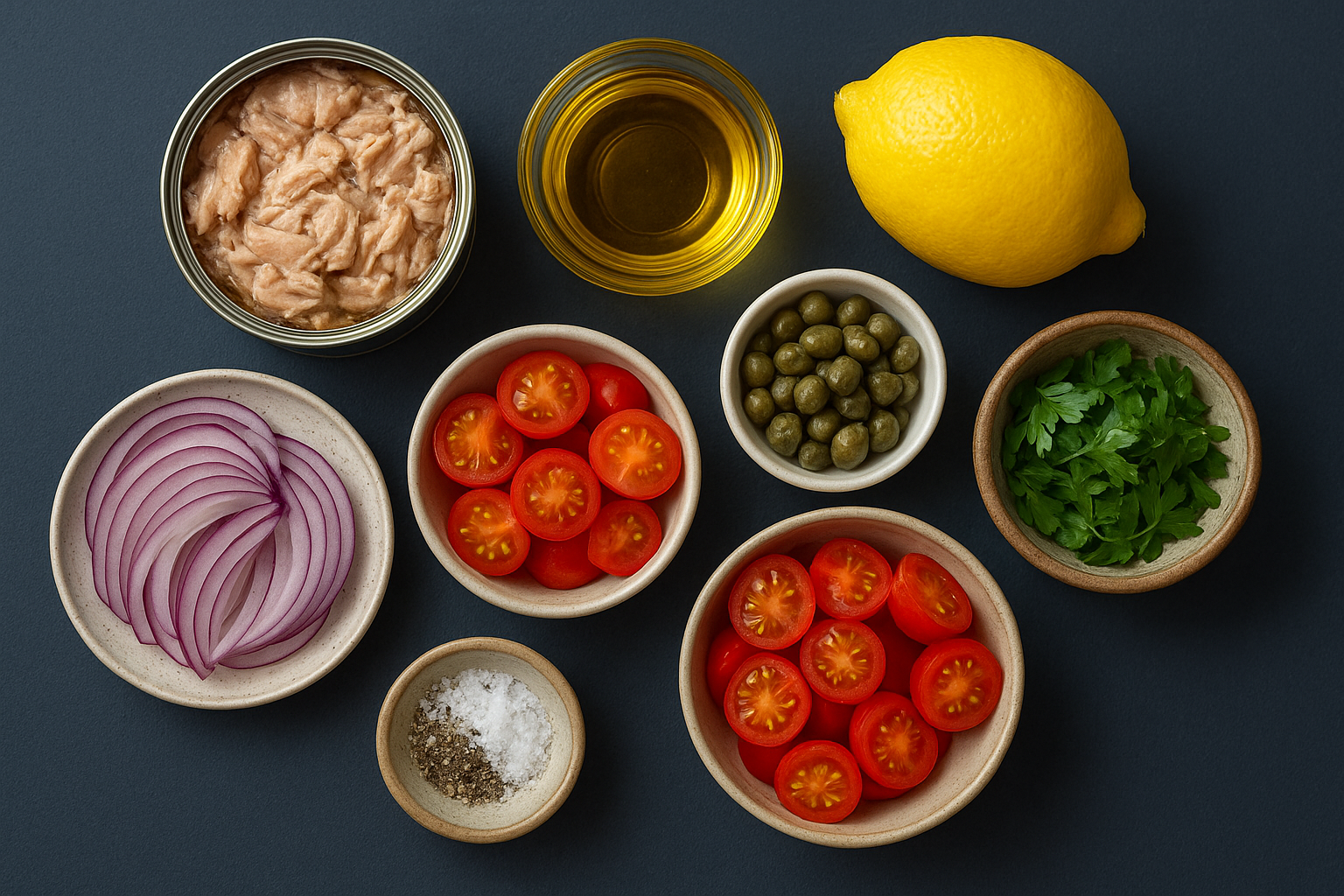
| Ingredient | Amount |
|---|---|
| Solid-pack tuna in olive oil, drained | 2 cans (5 oz each) |
| Extra virgin olive oil | 3 tablespoons |
| Fresh lemon juice | Juice of 1 lemon |
| Capers, rinsed | 2 tablespoons |
| Red onion, thinly sliced | ¼ cup |
| Cherry tomatoes, halved | 1 cup |
| Flat-leaf parsley, chopped | 2 tablespoons |
| Salt and black pepper | To taste |
Smart swaps when you’re working with what you have
Your pantry won’t always have every ingredient on the list, and that’s fine. White beans or chickpeas work well in place of capers if you want more substance without the brininess. Swap red onion for thinly sliced shallots if you prefer a milder bite.
If you can’t find tuna packed in olive oil, drain water-packed tuna thoroughly and increase the dressing oil by one full tablespoon to compensate.
Step 1. Prep the mix-ins
Good prep takes about five minutes and sets up the rest of your Italian tuna salad recipe for success. Each mix-in needs a small amount of attention before it goes into the bowl, and skipping these steps shows up in the final texture and flavor.
Handle the red onion first
Raw red onion brings sharp bite, but too much sharpness can dominate the whole salad. Soak your thinly sliced onion in cold water for five minutes, then drain and pat dry. This pulls out the harsh sulfur compounds and leaves you with a milder, sweeter flavor that integrates with the olive oil dressing rather than fighting it.
Skipping the soak leaves a raw onion sharpness that overpowers the tuna, even after you dress the salad.
Prep the tomatoes and herbs
Halve your cherry tomatoes and set them cut-side up on a paper towel for two minutes. This drains excess moisture that would otherwise water down your dressing. For the parsley, strip the leaves from the stems and chop them roughly, not too fine. You want visible flecks of green throughout the bowl, not a fine dust. Rinse and drain your capers well before combining to keep the salt level under control.
Step 2. Dress and combine without breaking the tuna
Now that your mix-ins are ready, this is where your italian tuna salad recipe either holds together or turns into mush. Drain your tuna well, then transfer it to your bowl in large intact chunks. Don’t break it up yet.
Build the dressing directly in the bowl
Pour the extra virgin olive oil over the tuna first, before any acid. Oil coats the fish and protects the chunks when the lemon juice hits. Then squeeze in the fresh lemon juice and let everything sit for thirty seconds untouched.
Adding oil before lemon juice keeps the tuna firm and gives your finished salad real texture.
Follow this order every time:
- Oil over tuna
- Lemon juice over oil
- Salt and pepper
- Mix-ins last
Fold, don’t stir
Use a wide spoon to fold the salad with a gentle lifting motion, not circular stirring. Add the onion, tomatoes, capers, and parsley, then fold two or three times. Stop when everything looks evenly distributed but the tuna still has visible chunks.
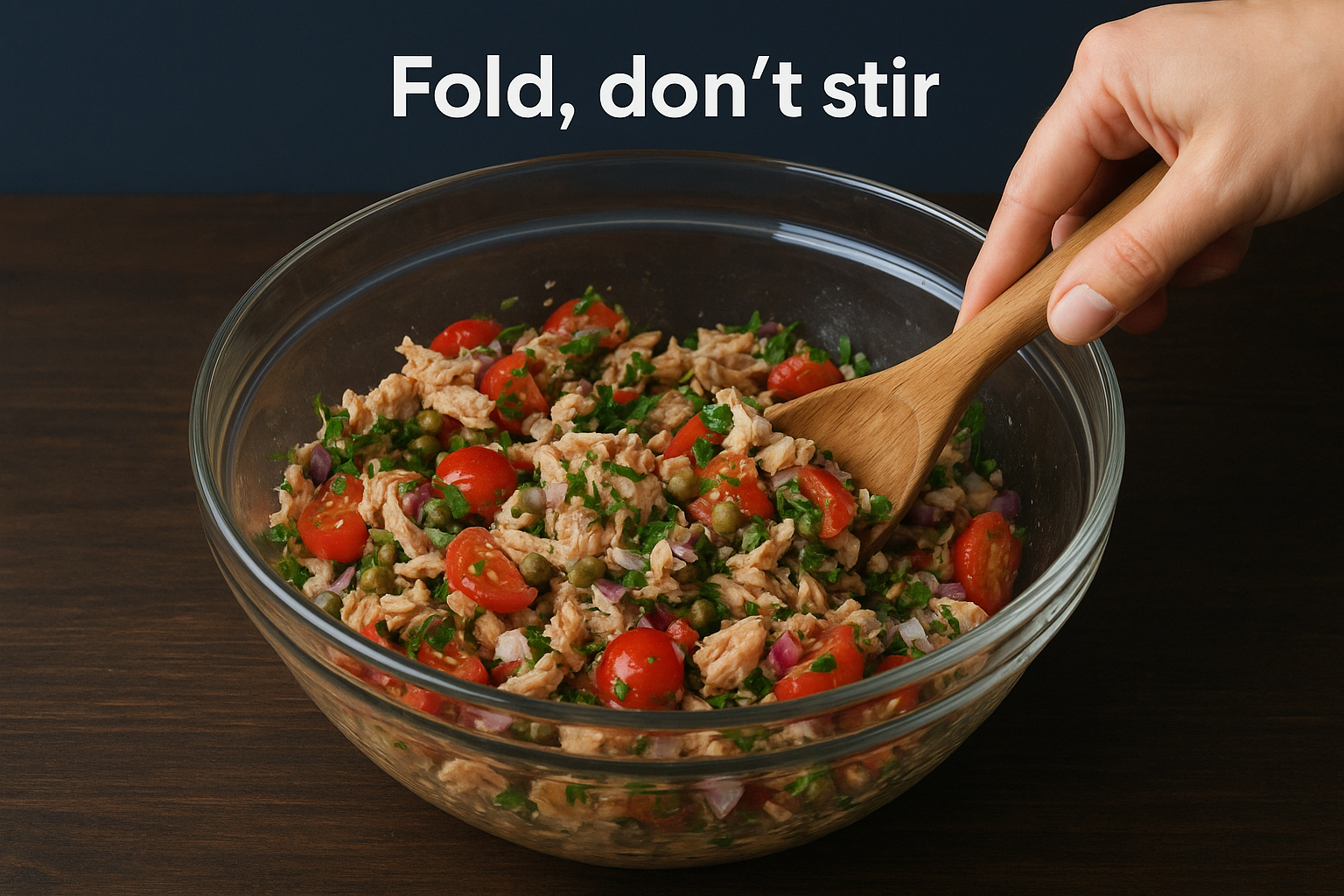
Taste and adjust the seasoning before serving. A small extra squeeze of lemon or a pinch of salt often sharpens the whole bowl without any additional effort.
Serve, store, and make it a meal
Your Italian tuna salad recipe is best served at room temperature, not straight from the fridge. Cold dulls the olive oil and mutes the lemon, so pull it out ten minutes before eating if you’ve made it ahead.
Serving at room temperature keeps the olive oil fluid and lets every flavor come through clearly.
Ways to build a full meal
This salad works well on its own, but a few simple additions turn it into a complete lunch or light dinner. Here are the most practical options:
- Spoon it over thick slices of toasted sourdough or ciabatta
- Serve alongside a handful of arugula dressed with olive oil and lemon
- Tuck it into a crusty roll with sliced roasted peppers
- Plate it over white beans for extra protein and substance
Storing what’s left
Keep leftovers in an airtight container in the refrigerator for up to two days. The tomatoes release some liquid overnight, so give everything a gentle fold before serving again. Add a small drizzle of fresh olive oil and a squeeze of lemon to bring it back. Skip the freezer entirely, because the tuna texture breaks down and the vegetables turn soft.
A simple lunch you will make again
This italian tuna salad recipe proves that the best food doesn’t come from long ingredient lists or complicated techniques. Ten minutes, a handful of quality pantry staples, and one good bowl is all it takes to put something genuinely satisfying on the table.
Once you make it once, the process becomes second nature. You’ll adjust the lemon-to-oil ratio to match your personal taste, swap in different vegetables based on what’s in your fridge, and start keeping good canned tuna stocked at all times. That kind of flexibility is exactly what makes a recipe worth returning to.
If this style of simple, ingredient-forward Italian cooking appeals to you, visit La Dolce Vita Cucina in Chicago’s Portage Park neighborhood. Our menu carries that same philosophy from lunch through dinner, with homemade pasta, premium seafood, and house-made gelato that show what happens when quality ingredients get the space to speak for themselves.