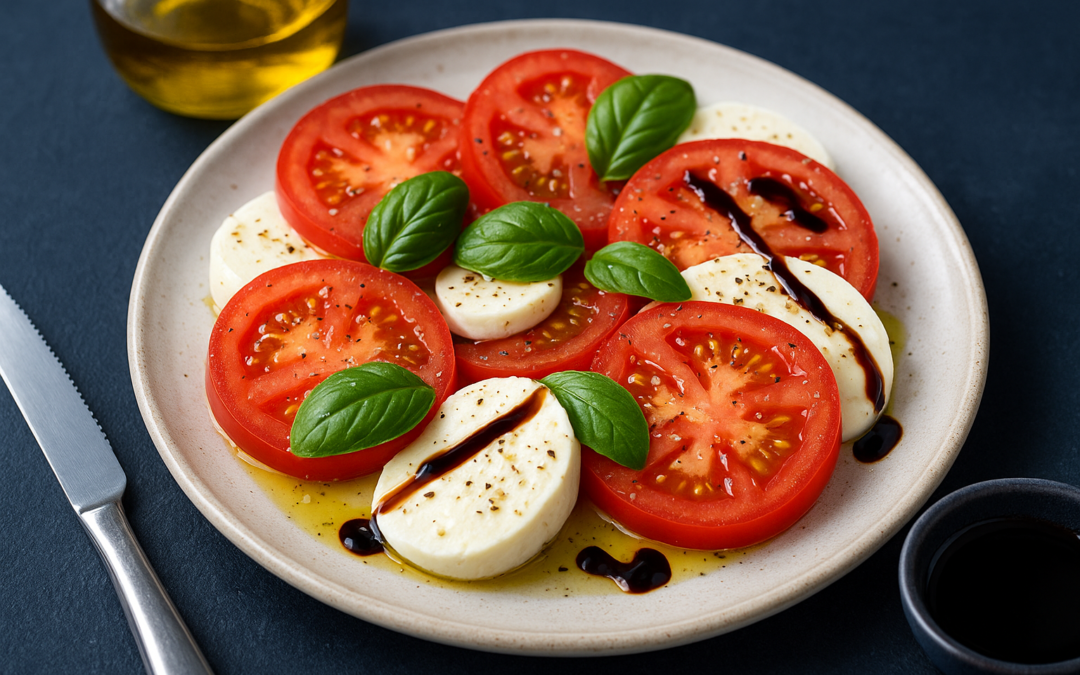
A great caprese salad recipe comes down to three ingredients, ripe tomatoes, fresh mozzarella, and basil, arranged with intention and dressed simply. That’s it. No lengthy ingredient list, no complicated technique. But getting those few elements right, from the quality of each component to how you layer and dress them, makes all the difference between a forgettable side and the kind of dish that stops a table mid-conversation.
At La Dolce Vita Cucina in Chicago’s Portage Park neighborhood, we treat Italian food with that same respect for simplicity. Our kitchen knows firsthand that the best Italian dishes earn their place through restraint, not complexity. Caprese is a perfect example, and it’s one of the easiest recipes you can master at home.
Below, you’ll find a step-by-step guide to building a classic Caprese salad with proper layering technique, plus how to choose between a traditional extra virgin olive oil finish and a balsamic glaze. We’ll also cover how to pick tomatoes and mozzarella worth using, so every plate you make lives up to the original.
What makes a great Caprese salad
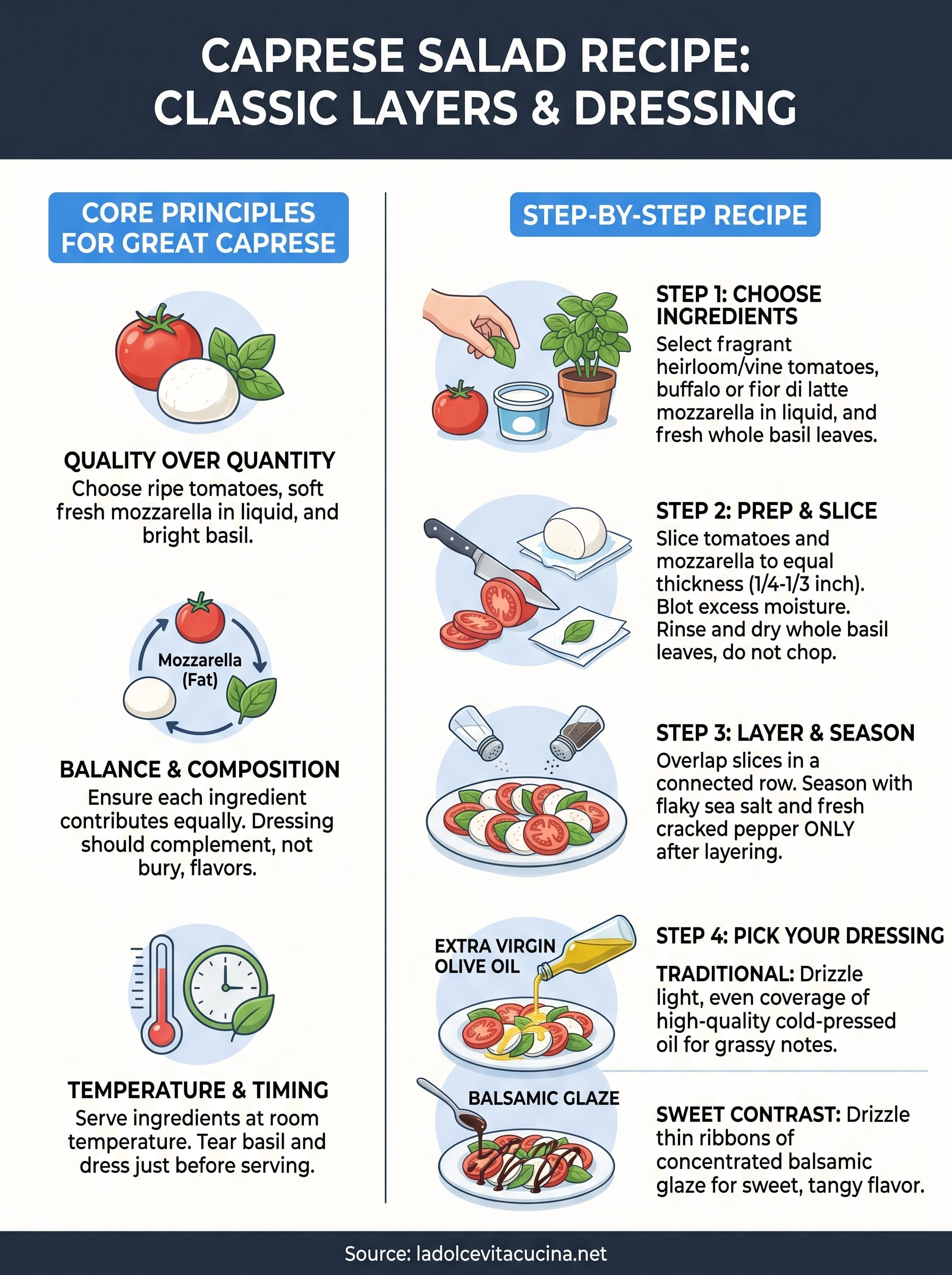
A great Caprese salad recipe is built on restraint and quality, not technique. You are working with three core ingredients, and each one carries equal weight on the plate. When even one element is mediocre, a watery tomato, rubbery mozzarella, or wilted basil, the whole dish falls flat. Knowing what separates a sharp Caprese from a forgettable one comes down to understanding why each component is there and what it contributes to the plate as a whole.
Quality over quantity
Most home cooks approach Caprese by grabbing whatever tomatoes and mozzarella are available at the store. The result tends to be fine but unremarkable. What Italian cooking has always recognized is that a small number of high-quality ingredients delivers far more flavor than a longer list of average ones. Your tomatoes need to be ripe to the point where they smell like tomatoes before you even cut them. Your fresh mozzarella should be soft, white, and stored in water or whey, not pre-sliced in dry packaging.
Here is a quick guide to help you spot quality at the store:
| Ingredient | What to look for | What to avoid |
|---|---|---|
| Tomatoes | Deep color, firm but yielding, fragrant | Hard, pale, or mealy texture |
| Mozzarella | Stored in liquid, soft center, milky smell | Dry packaging, rubbery feel |
| Basil | Bright green, no dark spots, strong aroma | Yellowing edges, limp leaves |
Balance between fat, acid, and freshness
Caprese is not simply a stack of ingredients. It is a balanced composition where each element offsets the others. The tomato brings acid and juice. The mozzarella brings fat and richness. The basil brings a sharp, herbal note that cuts through both. Your dressing, whether extra virgin olive oil or balsamic glaze, needs to complement that balance rather than bury it.
A heavy hand with any dressing will mask the natural flavor of ripe tomatoes and fresh mozzarella, which is exactly what you are trying to showcase.
Getting this balance right means tasting as you build the dish. Add your dressing gradually and let the ingredients guide you before deciding the plate needs more.
Temperature and timing
One of the most common mistakes people make with a Caprese salad is serving it cold straight from the refrigerator. Cold dulls flavor, especially in tomatoes, which lose much of their sweetness and aroma when chilled. Pull your tomatoes and mozzarella out of the fridge at least 20 to 30 minutes before you plan to serve so they can reach room temperature and express their full character.
Timing applies to the basil as well. Tear or place your leaves just before serving because basil oxidizes quickly and darkens within minutes of being handled. Waiting until the last moment keeps each leaf bright, fragrant, and visually sharp on the plate.
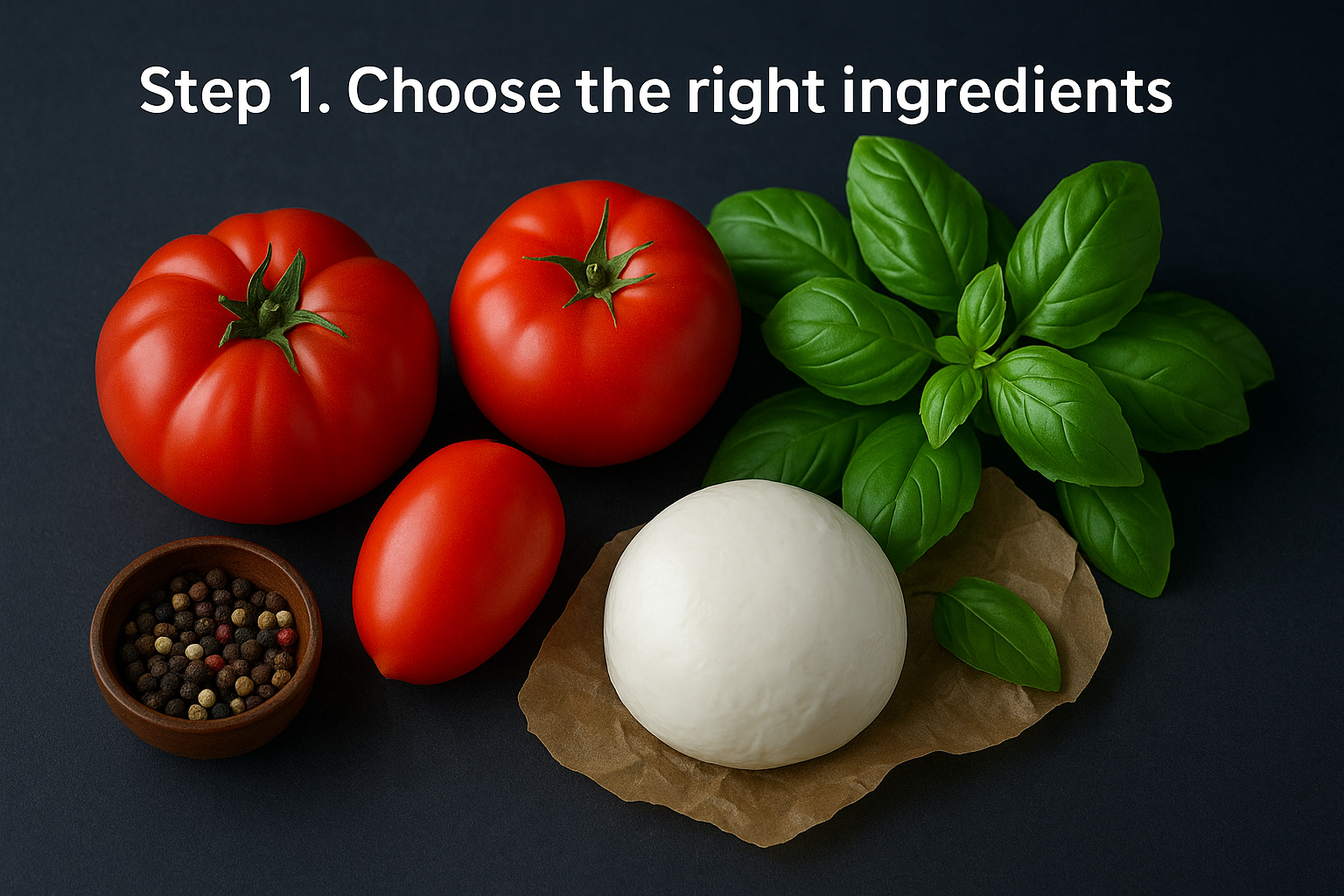
Step 1. Choose the right ingredients
Your ingredients are everything in this recipe. A caprese salad recipe lives or dies on what you bring home from the store, so spending a few extra minutes at the market selecting the right tomatoes, mozzarella, and basil pays off immediately on the plate.
Tomatoes
Choose tomatoes that are ripe and fragrant before you buy them. The best varieties for Caprese are heirloom tomatoes, vine-ripened beefsteak tomatoes, or roma tomatoes, all of which hold their structure when sliced while delivering enough juice and sweetness to balance the mozzarella. Hold each tomato and give it a gentle squeeze. It should yield slightly, not feel like a rubber ball.
Avoid refrigerated tomatoes from the produce section. Cold storage breaks down their cellular structure, making them mealy and tasteless no matter how long you let them sit out afterward.
Pick tomatoes that are roughly the same diameter as your mozzarella ball. This keeps each layer even on the plate and makes every bite consistent from start to finish.
Mozzarella
Fresh mozzarella sold in liquid, either water or whey, is what you need. Look for buffalo mozzarella (mozzarella di bufala) if your store carries it, as it has a richer, creamier texture than cow’s milk versions. If buffalo mozzarella is not available, a good fior di latte works well and is more widely stocked.
Check the packaging date carefully. Fresher mozzarella has a mild, milky smell and a slightly springy pull when you press it. Avoid pre-sliced mozzarella in dry packaging because it lacks moisture and turns tough after a few minutes on the plate.
Basil
Buy a fresh basil bunch or a living basil plant, which supermarkets increasingly stock near the produce section. You want leaves that are large, bright green, and unblemished. Smaller leaves work too, but larger ones are easier to place and cover more surface area across each layer.
Avoid pre-washed, pre-cut basil sold in sealed bags. It oxidizes before you even get it home, and the flavor is noticeably weaker than leaves cut fresh from the stem.
Step 2. Prep tomatoes, mozzarella, and basil
Preparation for this caprese salad recipe is straightforward, but the way you cut and handle each ingredient directly affects how the finished dish looks and tastes. Your goal here is clean, even slices and minimal handling so every component stays fresh and intact until the plate reaches the table.
Slice tomatoes and mozzarella evenly
Start with your tomatoes. Use a sharp serrated knife to cut each one into slices roughly a quarter to a third of an inch thick. A dull knife drags and crushes the flesh, causing the tomato to bleed juice before you even begin layering. After slicing, lay each piece on a paper towel for two to three minutes to absorb the excess moisture. This step keeps the plate from turning watery once you add your dressing.
Wet tomatoes dilute your olive oil or balsamic glaze, which flattens the dressing and washes out the flavor you spent time sourcing.
Cut your mozzarella to the same thickness as your tomato slices. Matching the thickness keeps the layers balanced and ensures no single ingredient overwhelms the bite. If you are using buffalo mozzarella, handle it gently because it tears more easily than cow’s milk varieties. Pat the mozzarella slices dry with a paper towel as well, since liquid from the packaging will pool on the plate the same way tomato water does.
Handle basil correctly
Basil needs minimal handling to stay bright and flavorful on the plate. Rinse your leaves under cold water and pat them completely dry with a paper towel. Do not chop or slice the basil for a classic presentation. Instead, leave each leaf whole and set it on the salad at the very last moment before serving. Chopping exposes more surface area to air, which speeds up browning and significantly weakens the aroma.
If your leaves are very large, you can tear each one in half once, but keep every piece as intact as possible. Hold the washed leaves at room temperature while you finish slicing the tomatoes and mozzarella. Storing basil in the fridge, even briefly, turns the leaves dark and limp fast.
Step 3. Layer and season it the classic way
Layering is where this caprese salad recipe takes its final shape, and the order and spacing you use here affect both the presentation and how the flavors combine in each bite. Work on a flat plate or a wide shallow bowl so every slice has room to lay flat rather than stack at odd angles.
Build the stack in the right order
Start by placing a tomato slice as your base, then lay a mozzarella slice directly on top, slightly offset so both are visible from above. Follow that with a single basil leaf, tucked between the tomato and mozzarella or rested on top of the mozzarella. Repeat this pattern across the plate, overlapping each group slightly so the arrangement reads as a connected row rather than separate piles.
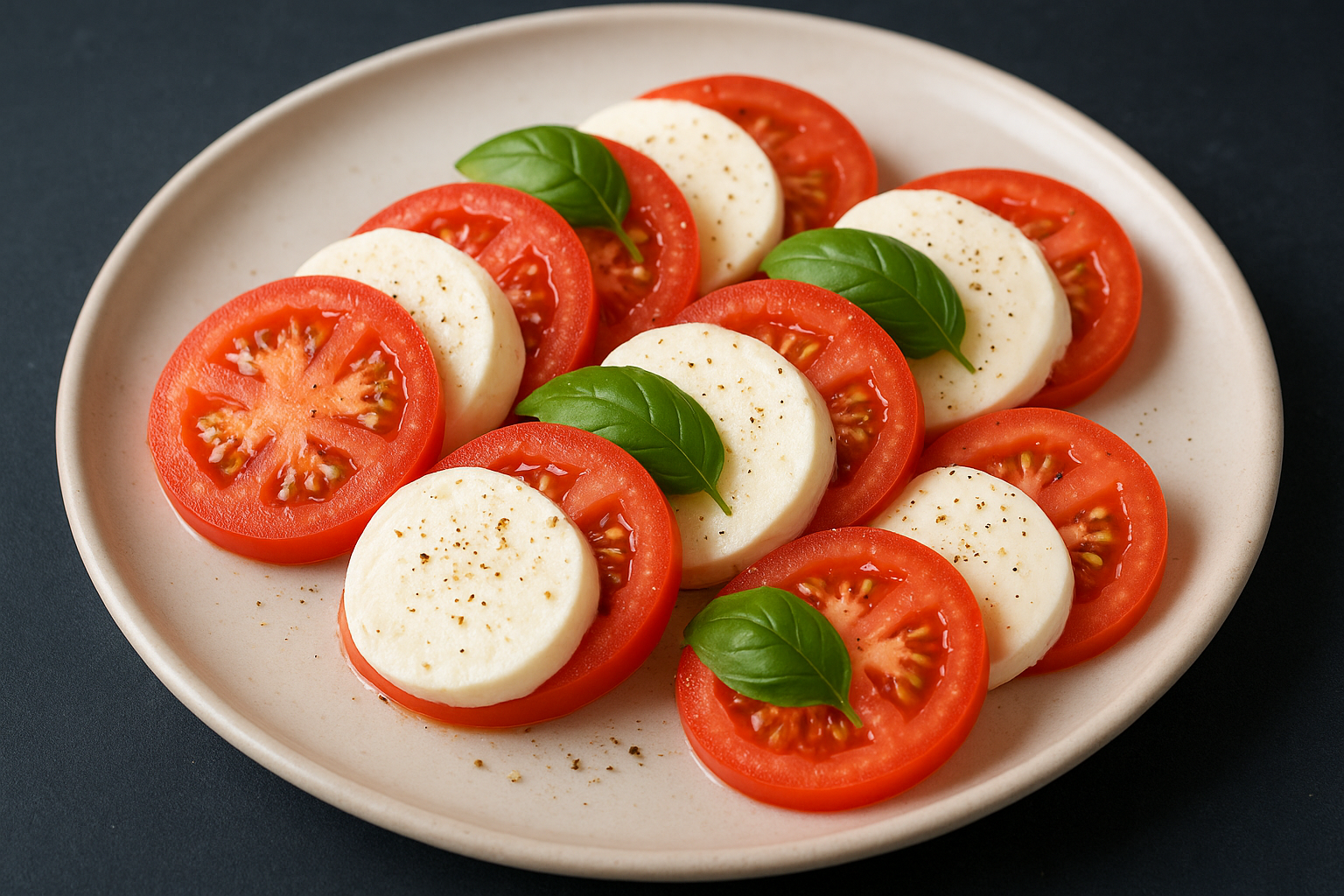
Overlapping the slices by about a third creates the classic shingled look that lets you see all three ingredients at once without any one element disappearing under another.
A standard portion for two people uses three to four tomatoes and a similar number of mozzarella slices, which gives you enough groups to fill a medium plate without crowding it. Keep your spacing consistent and adjust the angle of each slice so the presentation stays uniform from one end to the other.
Season with salt and pepper at the right moment
Season the plate only after layering is complete, not before. Salting tomatoes too early draws out their moisture fast, which turns the plate watery before anyone sits down. Use flaky sea salt rather than fine table salt because the larger crystals dissolve more slowly and give each bite a distinct, clean burst of salinity.
Crack fresh black pepper directly over the plate just before serving. Black pepper oxidizes quickly once ground, so pre-ground pepper delivers very little aroma compared to freshly cracked. A light pass of pepper across the whole plate is enough. You are seasoning, not coating, so restraint here carries the same logic as the rest of the dish.
Step 4. Pick your dressing: olive oil or balsamic glaze
The dressing you choose for this caprese salad recipe changes the character of the dish. Extra virgin olive oil keeps things clean, light, and traditional. Balsamic glaze adds sweetness and a deeper, more complex note. Both work, and neither is wrong. What matters is that you apply whichever one you choose with a measured hand so the tomato and mozzarella stay the focus of every bite.
Extra virgin olive oil
A high-quality extra virgin olive oil is the most traditional finish for Caprese, and it is also the most forgiving. Drizzle it directly over the layered plate in a slow, thin stream, starting from one end and working to the other. You want light, even coverage across the tomatoes and mozzarella rather than a pool collecting at the bottom of the plate.
Use an olive oil with a grassy or peppery finish rather than a neutral one, since those flavor notes sharpen the basil and complement ripe tomatoes well.
Look for bottles labeled "cold-pressed" or "first cold press" because these retain more of the olive’s natural flavor compounds compared to processed alternatives. About one to two tablespoons is enough for a plate serving two people.
Balsamic glaze
Balsamic glaze is a reduction of balsamic vinegar, cooked down until it thickens into a syrup. It brings a sweet, tangy contrast that pairs especially well with very ripe, sweet tomatoes. You can buy balsamic glaze ready-made at most grocery stores, or make your own by simmering plain balsamic vinegar in a small saucepan over medium-low heat until it reduces by half and coats the back of a spoon.
Apply balsamic glaze by using a spoon to drizzle thin ribbons across the plate rather than pouring it. The glaze is more concentrated than olive oil, so a little goes further than you expect. If you want both dressings on the same plate, add the olive oil first, then follow with a light pass of balsamic glaze for layered flavor without overwhelming the salad.
Time to eat
This caprese salad recipe takes about 15 minutes from start to finish, and the result looks and tastes far more considered than the effort involved. Serve it immediately after drizzling your dressing so the basil stays bright and the tomatoes hold their texture at their peak. Pair it as a starter before pasta or grilled meat, or keep it simple alongside crusty bread and a glass of white wine.
Caprese also works well as part of a larger spread. Antipasto platters and cured meats sit comfortably alongside it, and the simple flavor profile does not compete with anything else on the table.
If this recipe gave you an appetite for the real thing, come experience authentic Italian cooking in Chicago’s Portage Park neighborhood. At La Dolce Vita Cucina, every dish reflects the same commitment to quality ingredients and honest preparation that makes Italian food worth sitting down for. Book your table and taste what fresh, intentional cooking actually feels like.