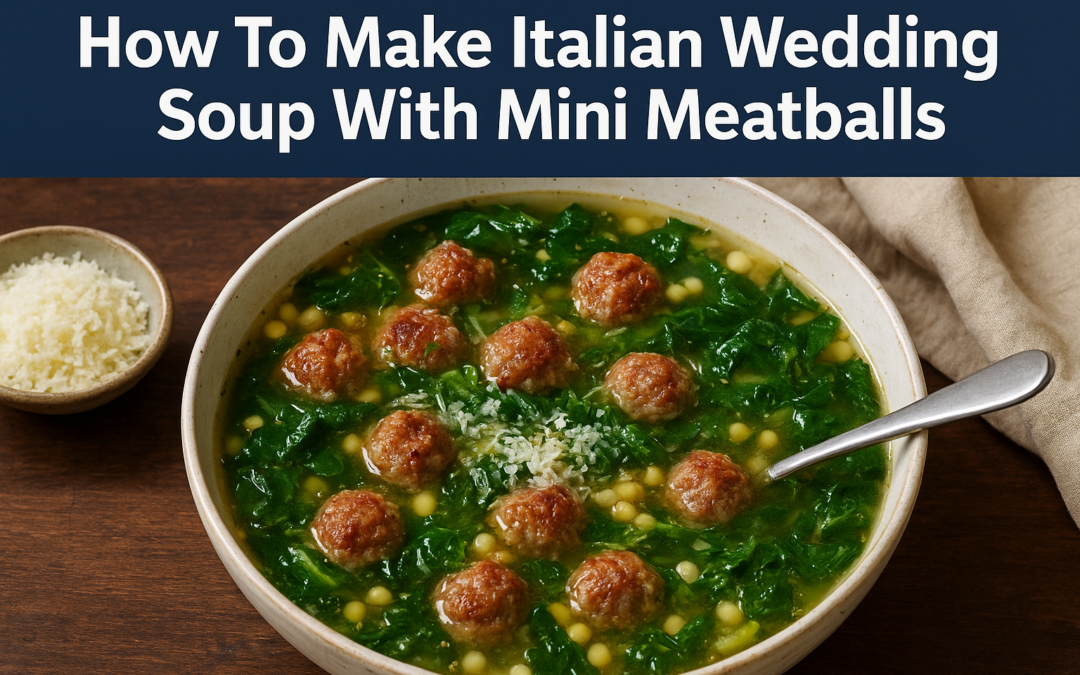
Few Italian soups carry as much warmth and nostalgia as a well-made bowl of wedding soup. At La Dolce Vita Cucina in Chicago’s Portage Park neighborhood, we cook from a place of tradition, and this recipe sits close to that spirit. If you’ve been wondering how to make Italian wedding soup at home, you’re in for a satisfying project. It’s simpler than you might think, and the result is one of the most comforting dishes in Italian-American cooking.
The name "wedding soup" doesn’t actually refer to a wedding celebration. It comes from the Italian phrase minestra maritata, meaning "married soup", a reference to the marriage of meat and greens in the broth. That combination is what gives the soup its character: tender mini meatballs, leafy greens like escarole or spinach, and small pasta swimming in a clear, savory chicken broth. Every spoonful hits differently.
This guide walks you through the entire process from scratch, forming the meatballs, choosing the right pasta (acini di pepe is the classic pick), selecting your greens, and building a broth that actually tastes like something. We’ll share the techniques we rely on in our own kitchen, along with tips to help you nail the texture and flavor on your first try. Whether you’re cooking for a weeknight dinner or feeding a crowd, this is a recipe that earns its place in your rotation.
What Italian wedding soup is and why it works
Italian wedding soup has been part of Italian-American cooking for generations, but most people misunderstand where the name comes from. This soup has nothing to do with weddings. Its name traces back to minestra maritata, a Southern Italian phrase meaning "married soup", which refers to the pairing of meat and greens in the broth. The dish originated in the Campania and Lazio regions of Italy, where cooks combined whatever leafy vegetables and meats they had into a single pot. When Italian immigrants brought it to America, it became one of the most recognized soups in Italian-American households, especially in cities like Chicago.
The history behind the name
The phrase minestra maritata appeared in Italian culinary texts as far back as the 15th century. The "marriage" in the name refers to flavors, not people, specifically the way savory, fatty meatballs pair with bitter, leafy greens in a clean broth. As Italian immigrants settled across the United States, they adapted the recipe using locally available ingredients. Escarole became the green of choice in many households, though spinach and kale work just as well depending on your preference and what’s in season.
The name "wedding soup" is a translation error that stuck. "Maritata" means "married" in Italian, not "wedding," and the marriage being celebrated is between meat and greens.
Why the flavor balance matters
This soup works because every component serves a specific role. The meatballs deliver richness and protein. The greens bring mild bitterness that cuts through the fat. The pasta, typically acini di pepe or orzo, gives the broth body and makes the soup more filling. A quality chicken broth connects all three, carrying flavor from one spoonful to the next without overwhelming any single element.
When you learn how to make Italian wedding soup properly, the key lesson is restraint. Nothing in the bowl competes for attention. The meatballs are small enough to eat whole. The greens wilt but hold their texture. The pasta stays firm. This soup is built on proportion, which is why it feels right in any season, not just the colder months.
What sets it apart from other Italian soups
Many Italian soups rely on tomatoes, beans, or thick stews as their foundation. Wedding soup takes a different approach, using a clear, savory broth that keeps the dish light and clean. That makes it noticeably lighter than minestrone and less dense than pasta e fagioli. The broth stays bright rather than heavy, which is part of its appeal.
The mini meatballs are also distinct from anything you’d find in a pasta dish. You’re not making standard-sized meatballs here. These are small, roughly the size of a marble, and they cook through quickly in hot broth. That size is intentional. It lets you get meat in nearly every spoonful without crowding out the greens or pasta. If you’ve only had canned versions of this soup, cooking it from scratch will show you just how different the flavors can be.
Ingredients and smart substitutions
Before you start learning how to make Italian wedding soup from scratch, it helps to see the full ingredient picture. The list is short but every item pulls weight, and understanding where you can swap without losing quality saves you a last-minute grocery run. Cheap broth and the wrong pasta will show up in the bowl, so it’s worth paying attention to the details.
What you need for the meatballs
The meatballs carry the most flavor in this soup, so the meat blend matters more than anything else on the list. A 50/50 mix of ground beef and ground pork gives you enough fat for moisture and seasoning depth. You’ll also need breadcrumbs, an egg, fresh garlic, grated Parmesan, fresh parsley, salt, and black pepper. Keep the portions modest since each meatball is roughly marble-sized, so a standard grocery pack of each ground meat stretches further than you’d expect.
- 1/2 lb ground beef (80/20 fat ratio)
- 1/2 lb ground pork
- 1/4 cup plain breadcrumbs
- 1 large egg
- 2 cloves garlic, minced
- 1/4 cup grated Parmesan
- 2 tbsp fresh flat-leaf parsley, chopped
- Salt and black pepper to taste
What you need for the broth and bowl
Your broth choice defines how the whole bowl tastes, so use a good-quality chicken broth rather than a diluted bouillon cube. Alongside the broth, you’ll need acini di pepe pasta, fresh escarole or spinach for the greens, and olive oil for browning. A yellow onion and a few extra garlic cloves help build the base before the broth goes in.
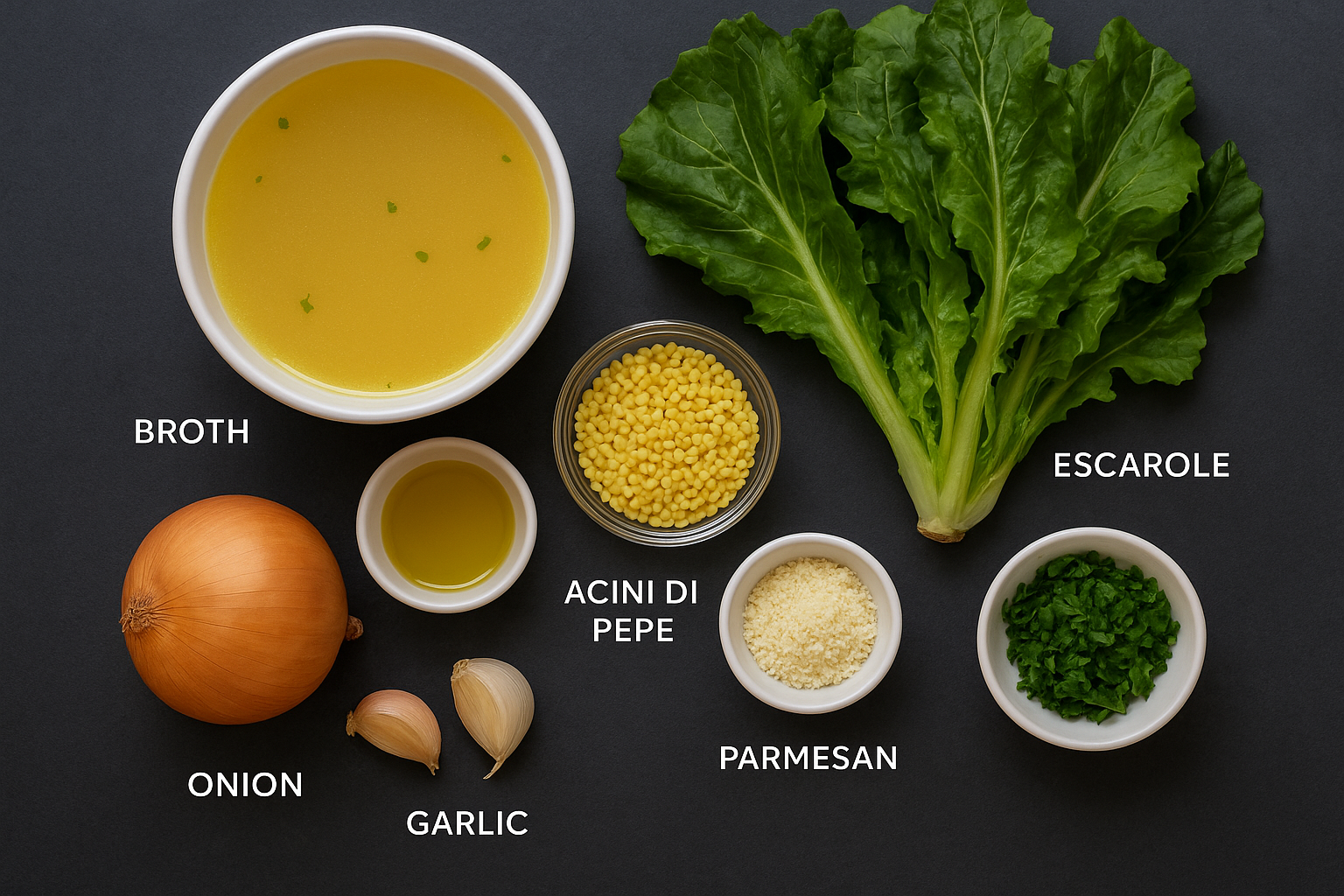
Acini di pepe stays small and firm in hot liquid, which keeps the soup balanced. Orzo is the best substitute if you can’t find it, and it holds its texture just as well.
Substitutions that actually work
Not every pantry stocks every ingredient, and a few practical swaps keep the recipe on track without changing what makes it good. Ground turkey replaces ground beef if you want a leaner meatball, though you should mix in an extra tablespoon of olive oil to account for the lower fat. Kale and Swiss chard both replace escarole without much fuss, though you should remove the thick ribs before adding them to the pot so they wilt evenly with the rest of the soup.
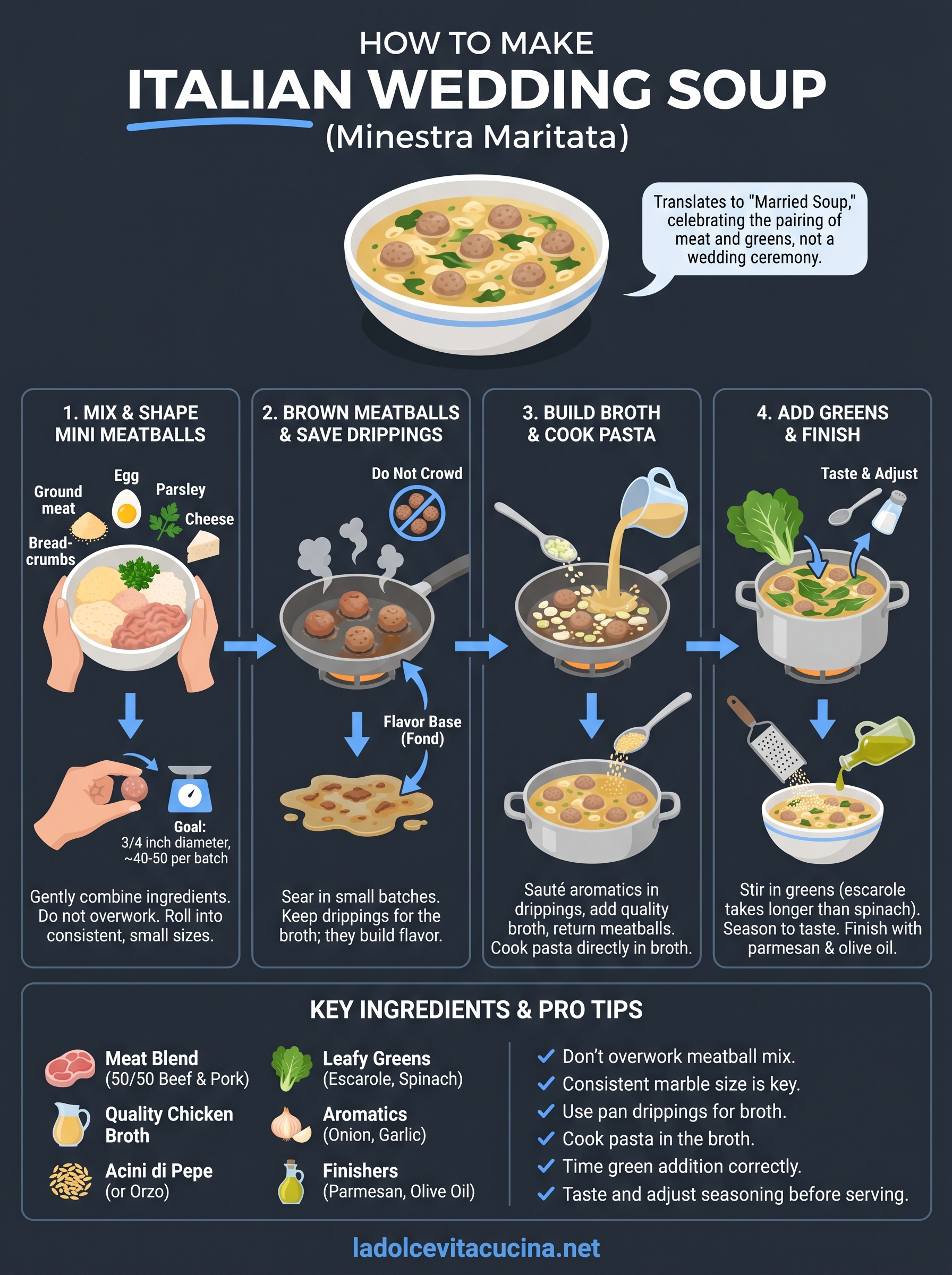
Step 1. Mix and shape mini meatballs
This is where the soup starts, and getting the meatball mixture right sets up everything that follows. The goal is a tender, well-seasoned blend that holds together when you shape it but doesn’t turn rubbery once it hits the broth. That balance comes down to two things: not overworking the meat and keeping your hands cold while you roll.
Mixing the meatball blend
Add the ground beef, ground pork, breadcrumbs, egg, minced garlic, Parmesan, parsley, salt, and pepper into a large bowl. Use your hands to combine the mixture, but stop as soon as the ingredients look evenly distributed. Overmixing activates the proteins in the meat and makes the meatballs dense and tight rather than soft and tender. You want the mixture to just come together, not become a paste.
Mixing with cold hands or briefly chilling the meat mixture for 15 minutes before shaping makes it easier to roll and helps the meatballs hold their shape.
Before you roll the entire batch, cook one small piece in a skillet and taste it. This quick test lets you adjust salt or pepper before committing to the full amount, which saves you from under-seasoned meatballs across the whole pot.
Shaping to the right size
Each meatball should be roughly 3/4 of an inch in diameter, about the size of a large marble or a small grape. That size is not arbitrary. Smaller meatballs cook through fast in hot broth, stay tender, and fit on a spoon alongside greens and pasta without taking over the bowl. A standard batch from the ingredient quantities listed above yields around 40 to 50 meatballs.

Knowing how to make Italian wedding soup well means committing to consistent sizing throughout the batch. Uneven meatballs cook at different rates, which means some will be overcooked by the time others finish. Use a small cookie scoop or a teaspoon to portion the meat before rolling, then roll each portion between your palms with light pressure. Line the finished meatballs on a parchment-lined sheet tray in a single layer so they don’t stick together before the next step.
| Meatball size | Diameter | Yield per batch |
|---|---|---|
| Too large | 1.5 inches | 15 to 20 |
| Correct size | 3/4 inch | 40 to 50 |
| Too small | 1/4 inch | 80+ (falls apart easily) |
Step 2. Brown meatballs for deeper flavor
Once your meatballs are shaped and lined up on the tray, resist the urge to drop them directly into the broth. Browning them first in a skillet takes about 10 minutes but adds a layer of savory flavor that you simply cannot get from poaching alone. This step is what separates a flat, pale bowl from one with real depth.
Why browning adds more than color
When the meatballs hit a hot, oiled skillet, the outer surface undergoes a reaction that builds new flavor compounds on the meat. This process, known as the Maillard reaction, creates the savory crust you see on the outside of well-cooked meat. The interior stays tender while the exterior firms up just enough to hold its shape when you add the meatballs to simmering broth later. Without this step, the meatballs poach soft but miss that extra layer of flavor entirely.
Browning every side is not strictly necessary. A sear on two sides is enough to build flavor without overcooking the interior before the meatballs finish in the broth.
How to brown meatballs in batches
Work in small batches to avoid crowding the pan. When you add too many meatballs at once, the skillet temperature drops and the meat steams instead of browns. Heat two tablespoons of olive oil in a large skillet over medium-high heat until the oil shimmers but does not smoke. Add the meatballs in a single layer with space between each one and let them sit undisturbed for about 90 seconds before turning.
Searing two sides, not all four, is enough. Use a small spoon or tongs to turn each meatball once, then remove them to a clean plate after another 60 to 90 seconds. They will not be fully cooked through at this stage, and that is intentional. The broth finishes the cooking in the next step, which is part of learning how to make Italian wedding soup the right way.
What to do with the drippings
Do not discard the fat left in the skillet. That rendered fat carries flavor from the browned meat, and you can use it to sweat the onion and garlic that start the broth in the next step. Pour off any excess oil until you have roughly one tablespoon left in the pan.
Keep the skillet on the burner rather than switching to a clean pot. All of those browned bits stuck to the bottom of the pan will loosen when liquid hits them, and that fond adds flavor to your broth base that a clean pot simply cannot replicate.
Step 3. Build the broth and cook pasta
With your meatballs browned and resting on a plate, the same skillet becomes your soup pot. This is not just a shortcut to save dishes. Building the broth directly in the pan with the drippings means every bit of flavor from the browning step carries forward into your liquid base. This is one of the most important moments in learning how to make Italian wedding soup, because a well-built broth changes the entire character of what ends up in the bowl.
Start the aromatics in the same pan
Set the skillet over medium heat and add your diced yellow onion to the remaining fat. Cook the onion for about four minutes, stirring occasionally until it softens and turns translucent. Add the minced garlic and cook for another 60 seconds, just long enough to bloom the garlic flavor without burning it. Burned garlic turns bitter fast, so keep the heat at medium and watch it closely during that last minute.
Add the broth and bring it to temperature
Pour in your chicken broth and use a wooden spoon to scrape the browned bits off the bottom of the pan. Those bits dissolve into the liquid and add a layer of savory depth that would otherwise be lost. Raise the heat to medium-high and bring the broth to a gentle boil.
Use a high-quality, low-sodium chicken broth here. A bland or overly salty broth throws off the entire balance of the soup, and you have very little ability to fix it once the pasta and meatballs are in.
Return the browned meatballs to the pot at this stage. Lower the heat to a steady simmer and let them cook through for about eight minutes. They will finish cooking in the broth and absorb its flavor at the same time.
Cook pasta directly in the broth
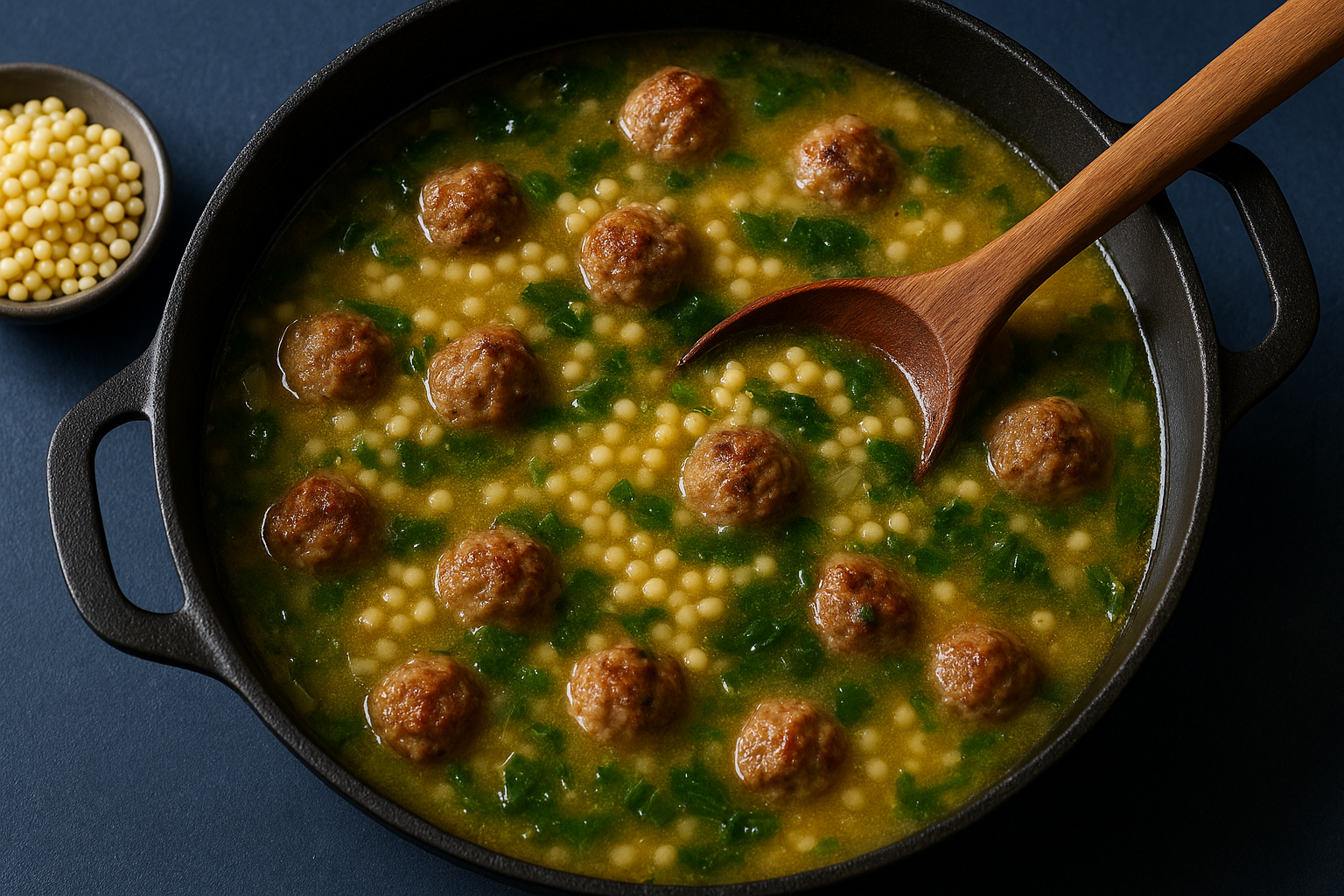
Add your acini di pepe directly to the simmering broth once the meatballs have cooked through. Stir the pasta immediately after adding it to prevent sticking, then cook according to package time, usually around eight to nine minutes, until just al dente. The pasta will continue softening slightly after you add the greens in the next step, so pull it a minute early if you want it to hold its texture in the finished bowl.
Step 4. Add greens and finish like a pro
The greens go in last, and the timing here is the difference between tender leaves and a mushy, overcooked mess. With the broth simmering and the pasta just shy of al dente, you’re about two minutes away from a finished bowl. This step moves fast, so have your greens washed, dried, and chopped before you reach this point in learning how to make Italian wedding soup.
Which greens to add and when
Add your chopped greens directly to the simmering broth and stir them in so they make full contact with the hot liquid. Escarole takes about three to four minutes to wilt down fully. Spinach moves much faster and typically wilts in one to two minutes, so watch it closely to avoid overcooking. The goal is for the greens to soften while holding just enough structure to give the soup some texture in every spoonful.
Tender greens like spinach go in at the very end and need almost no time. Sturdier greens like escarole or kale need two to four minutes, so add them slightly before you’d add spinach.
The quantity matters as much as the timing. A heavy handful of greens per two servings is the right ratio, roughly two packed cups for a standard six-cup batch of broth. Too little and the greens get lost against the meatballs and pasta. Too much and they crowd out everything else and turn the broth slightly bitter.
How to taste and adjust before serving
Once the greens are wilted, pull the pot off the heat and taste the broth directly. This is your last chance to correct the seasoning before the soup reaches the table. A flat broth usually needs a pinch of salt rather than more ingredients. If the broth tastes thin, a small splash of lemon juice brightens it without adding heaviness.
Finish each bowl with a light grating of fresh Parmesan directly over the top just before serving. The cheese melts slightly from the residual heat and adds a savory note that ties the meatballs, greens, and broth together. A small drizzle of olive oil over the surface works the same way and takes no extra effort.
| Final adjustment | When to apply | Amount |
|---|---|---|
| Salt | After greens wilt | Pinch at a time |
| Lemon juice | After greens wilt | 1 tsp maximum |
| Parmesan | In the bowl | Light grating |
| Olive oil | In the bowl | 1 tsp drizzle |
Serve, store, and reheat
Ladle the soup into wide, shallow bowls so the meatballs, greens, and pasta distribute evenly across each serving. Top with fresh Parmesan and a small drizzle of olive oil right before it reaches the table. Now you know how to make Italian wedding soup from scratch, and the result holds up well beyond the first meal.
Store leftovers in an airtight container in the refrigerator for up to four days. The pasta absorbs broth as it sits, so add a splash of chicken broth when reheating on the stovetop over medium heat. Reheat only the portion you plan to eat rather than the entire batch to keep the pasta from turning soft.
Italian food at this level deserves to be shared. If you want to experience homemade pasta and authentic Italian flavors in a welcoming setting, visit La Dolce Vita Cucina in Chicago’s Portage Park neighborhood and let us cook for you.