
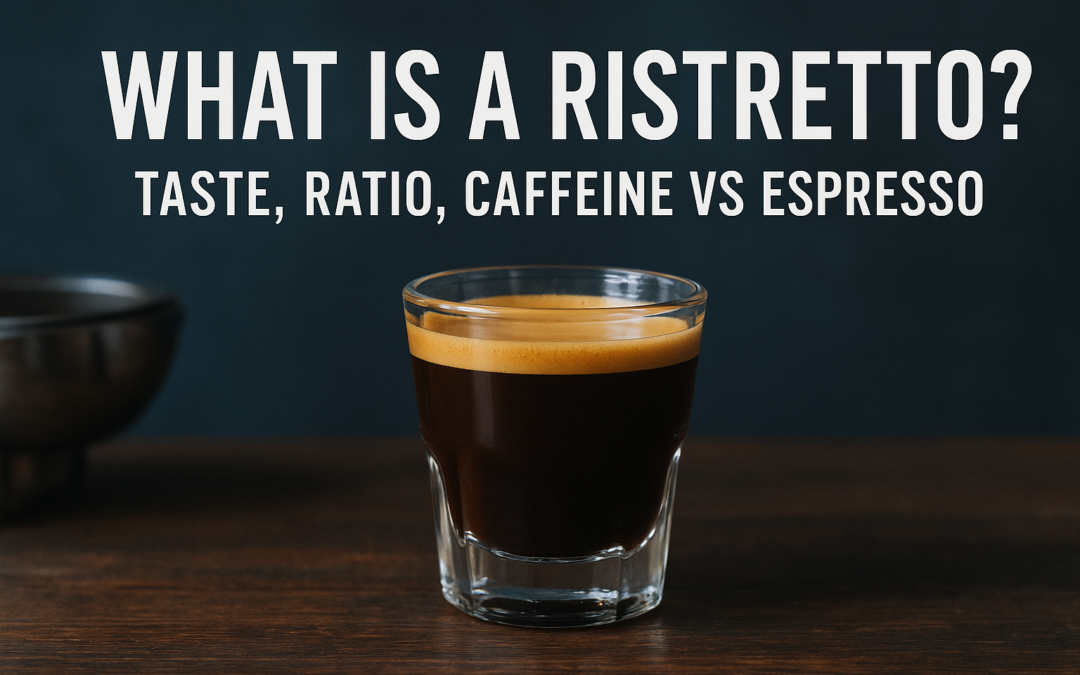
Order an espresso at most coffee shops and you know exactly what you’re getting. But ask for a ristretto and you’ll likely get a few confused looks, maybe even from the barista. So, what is a ristretto, and why does it matter? It’s a question we hear often at La Dolce Vita Cucina, where Italian coffee culture is just as much a part of the experience as our homemade pasta and house-made gelato here in Chicago’s Portage Park neighborhood.
A ristretto is a "restricted" espresso shot, same coffee grounds, less water, shorter extraction time. The result is a smaller, more concentrated pull that changes the flavor profile in ways most people don’t expect. It’s sweeter, fuller bodied, and arguably more nuanced than a standard espresso.
This article breaks down everything you need to know: the exact brewing ratio, how the taste differs from espresso, what happens to the caffeine content, and when you’d want to order one over the other. Whether you’re a daily espresso drinker or just starting to explore Italian coffee beyond the basics, you’ll walk away with a clear understanding of the ristretto and how to make one worth drinking.
What a ristretto is in espresso terms
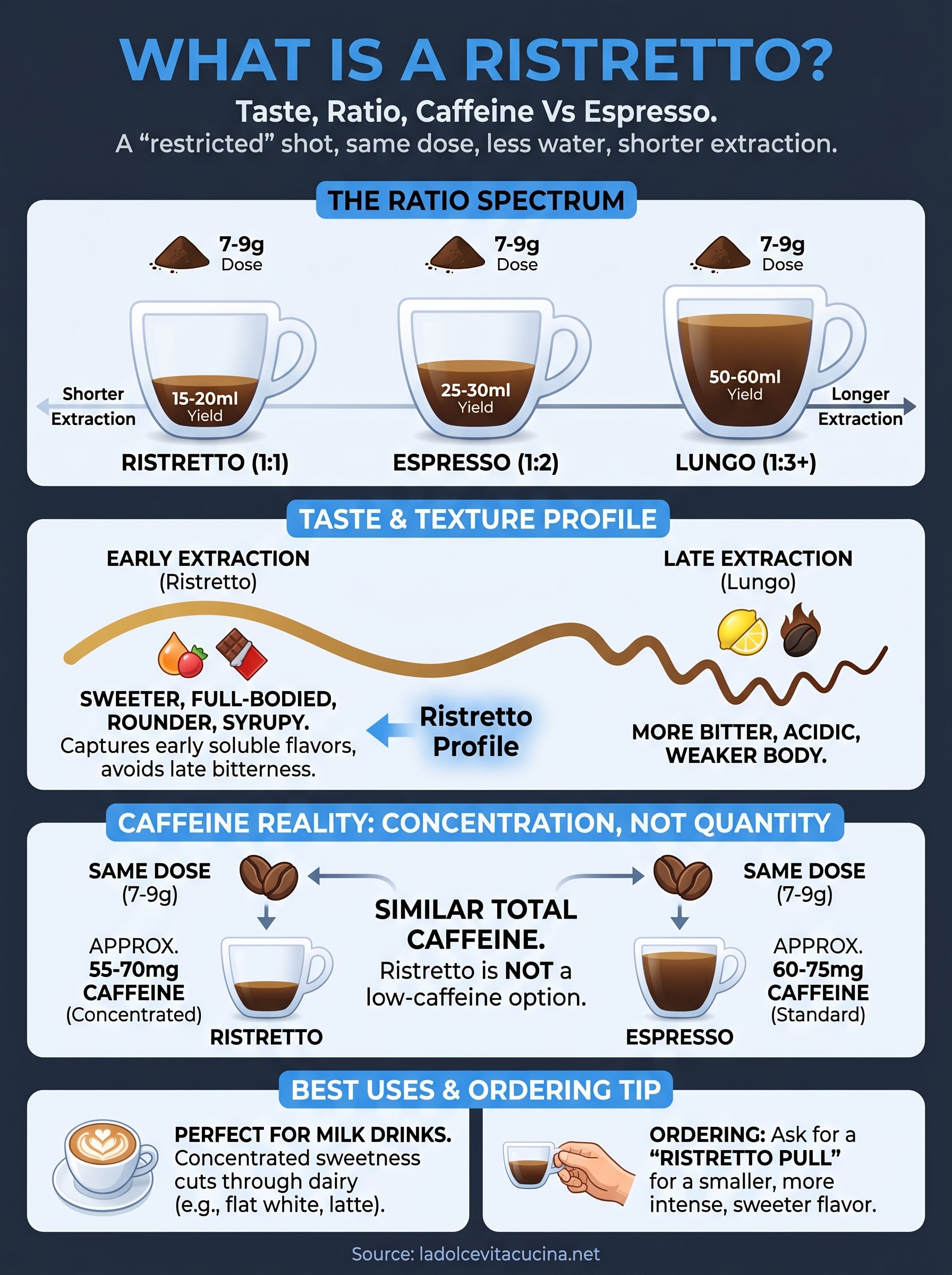
If you’ve ever wondered what is a ristretto at a technical level, the answer starts with the water-to-coffee ratio. A standard espresso uses roughly a 1:2 ratio, meaning one gram of ground coffee yields about two grams of liquid in the cup. A ristretto targets a 1:1 ratio, using the same coffee dose and the same pressure, but stopping the water flow before the full extraction completes. The only variable you’re changing is how much water passes through the grounds.
The brewing ratio explained
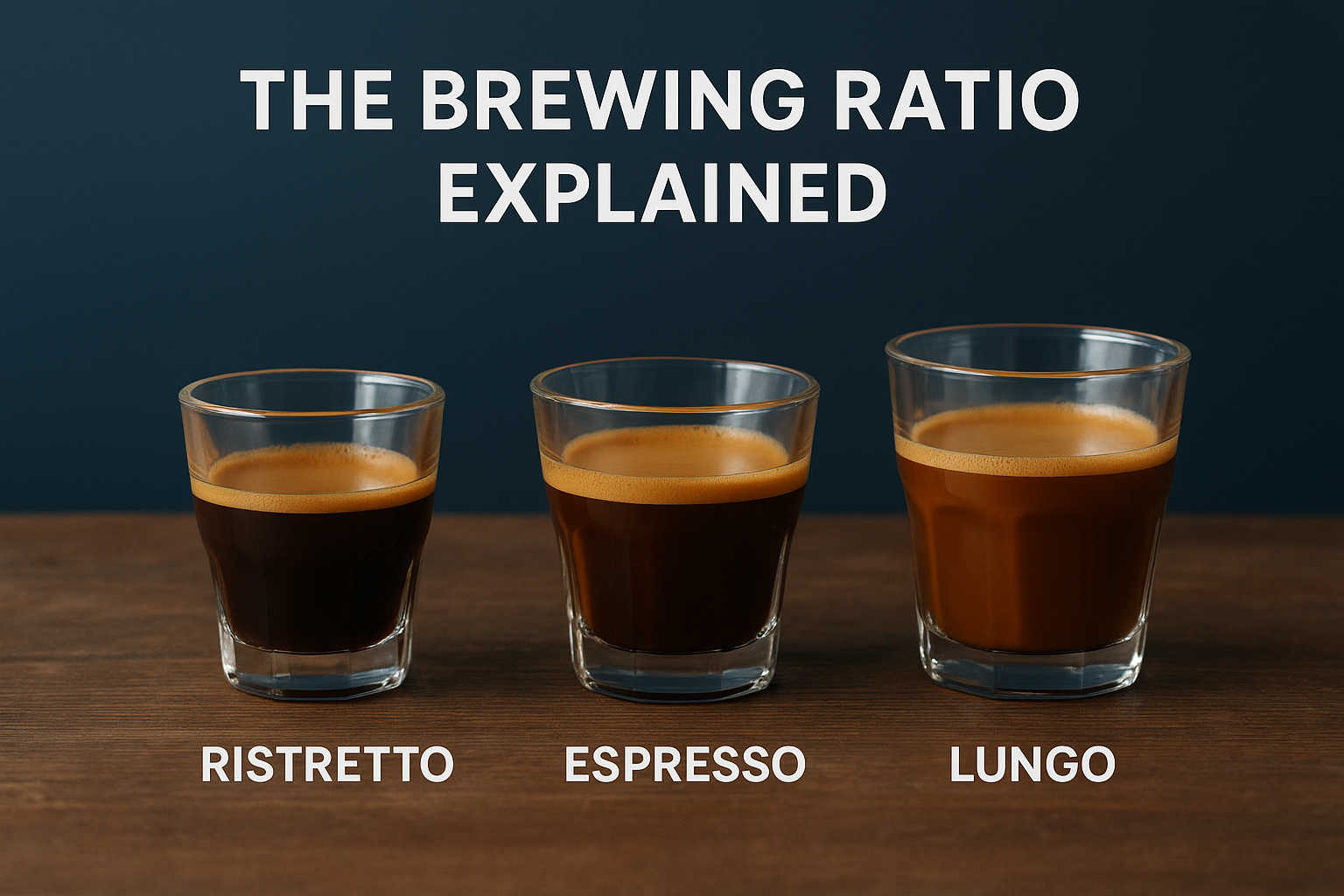
The ratio is what separates a ristretto from everything else on the espresso menu. For a single ristretto shot, you’re pulling roughly 15 to 20ml of liquid from 7 to 9 grams of coffee. That’s nearly half the output of a standard espresso, which pulls 25 to 30ml from the same dose.
| Shot type | Coffee dose | Liquid yield | Ratio |
|---|---|---|---|
| Ristretto | 7 to 9g | 15 to 20ml | 1:1 |
| Espresso | 7 to 9g | 25 to 30ml | 1:2 |
| Lungo | 7 to 9g | 50 to 60ml | 1:3+ |
How extraction time changes everything
Extraction time is where the flavor difference actually comes from. When hot water passes through coffee grounds, it pulls out different compounds at different stages. Sweeter, more soluble flavors extract first. Bitter and acidic notes come later in the pull.
By stopping the extraction early, a ristretto captures the sweeter front-end compounds while leaving most of the harsher bitter notes behind in the puck.
Your result is a shot that tastes rounder and less sharp than a standard espresso, despite sitting in a smaller, more concentrated volume of liquid.
Why people choose ristretto shots
Once you understand what is a ristretto, it’s easier to see why certain coffee drinkers actively seek it out. The shorter extraction pulls sweeter, more soluble compounds forward, so if you find standard espresso too sharp or acidic, a ristretto often solves that problem without adding milk or sugar.
If your espresso regularly tastes harsh or leaves a bitter finish, switching to a ristretto is one of the simplest adjustments you can make.
When a ristretto makes sense for your order
Ristretto shots work especially well in milk-based drinks like lattes and flat whites because the concentrated sweetness cuts through dairy more cleanly than a standard espresso pull. Many specialty coffee bars now default to ristretto in these drinks for exactly that reason.
You’ll also find a ristretto a better fit if you want a smaller, more intentional serving rather than a full-volume shot. Some drinkers simply prefer having less liquid but more layered flavor in the cup, with nothing bitter pulling your attention away from what the coffee actually tastes like.
Ristretto vs espresso vs lungo and long shot
Understanding what is a ristretto becomes much clearer when you line it up against the other shots on the menu. A standard espresso sits in the middle of the spectrum at a 1:2 ratio. A ristretto pulls less water and stops earlier, producing a sweeter, denser shot. A lungo pushes in the opposite direction, running more water through the same dose to reach a 1:3 or longer ratio, which extracts more bitter compounds and adds volume.
The lungo and the ristretto represent opposite ends of the espresso extraction spectrum, with the standard espresso sitting squarely between them.
Where the long shot fits in
A long shot and a lungo are often used interchangeably, but some cafes treat them slightly differently depending on grind size adjustments. The key point is that both use more water than a standard espresso, which makes them weaker in concentration and stronger in bitterness. If you want the opposite of that profile, a ristretto is your answer.
Taste and strength: what you actually notice
Once you know what is a ristretto, the next question is what you’ll actually experience in the cup. The most immediate difference is sweetness. Because you cut the extraction short, the bitter compounds that develop later in a standard pull never make it into your shot. What you’re left with is a fuller, rounder flavor with noticeably less edge.
Why ristretto tastes stronger but not harsher
The concentrated volume makes a ristretto taste more intense than espresso, but that intensity reads as body and depth rather than bitterness. Your palate picks up on chocolate, fruit, and malt notes more clearly without the sharp finish that often lingers through a longer pull.
The ristretto feels bold in the mouth but finishes clean, which is the opposite of what most people expect from a more concentrated shot.
You might also notice the texture feels heavier, almost syrupy, compared to a standard espresso. That physical weight in the cup is a direct result of the higher concentration of dissolved coffee solids packed into less water.
Caffeine in ristretto vs espresso: the facts
One of the biggest misconceptions about what is a ristretto is that the smaller volume means less caffeine. The reality is more nuanced. Because you’re using the same coffee dose as a standard espresso shot, you start with the same total caffeine potential in the grounds. The amount of water changes; the coffee doesn’t.
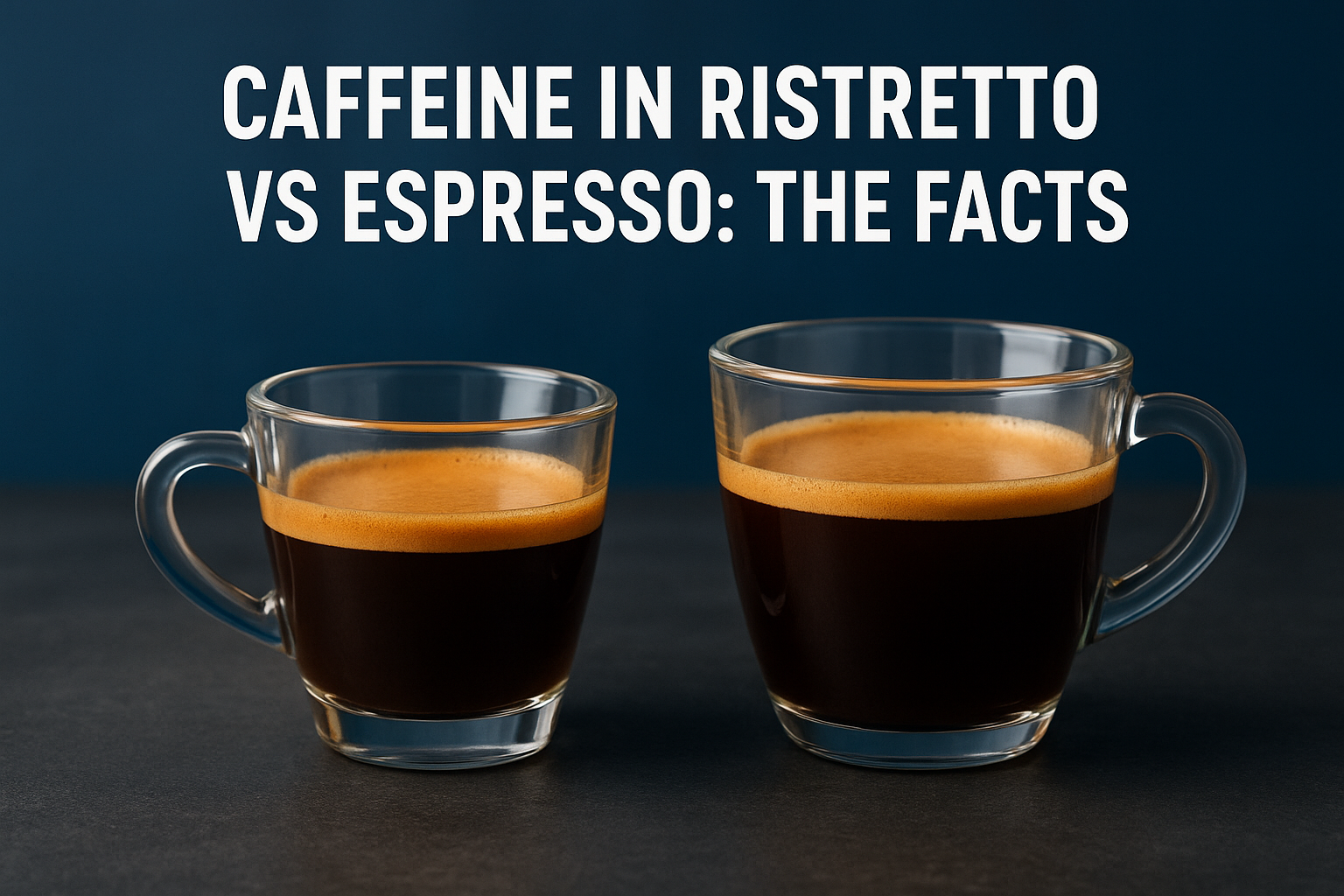
The volume in your cup doesn’t determine caffeine content; the amount of coffee used does.
How much caffeine actually extracts
Caffeine is highly soluble and extracts early in the brewing process, which means a ristretto captures most of the available caffeine despite the shorter pull. A standard single espresso carries roughly 60 to 75mg of caffeine, and a ristretto from the same dose lands in a very similar range, typically 55 to 70mg.
Your ristretto is not a low-caffeine option. It delivers comparable stimulant content to espresso in a smaller, more concentrated volume, which surprises most people ordering it for the first time. If you’re sensitive to caffeine, treat it the same way you’d treat a standard espresso shot.
How to make and order a ristretto
Now that you understand what is a ristretto, getting one right comes down to grind size and yield. Whether you’re brewing at home or ordering at a cafe, your goal is stopping the pull at roughly 15 to 20ml from a standard dose of 7 to 9 grams.
Telling your barista you want a ristretto pull on any espresso-based drink is usually all it takes.
Making one at home
If you own an espresso machine, dial your grind slightly finer than your normal espresso setting and stop your shot early based on yield by weight. Target a 1:1 ratio using the same dose you’d normally pull.
- Set your dose to 7 to 9 grams
- Stop your yield at 15 to 20ml
- Grind finer if the shot pulls too fast
Ordering at a cafe
Ask your barista for a ristretto pull instead of a standard espresso base. Most cafes will accommodate the request in any milk drink you order.
Many specialty cafes already default to ristretto in flat whites, but not all. Asking directly ensures you actually get the concentrated, sweeter shot you want.
Wrap it up
Now you have a complete answer to what is a ristretto: a short pull using the same coffee dose as espresso but half the water, producing a sweeter, more concentrated shot that skips the harsh bitter notes that develop later in the extraction. The ratio sits at 1:1, the extraction stops early, and the caffeine content stays roughly in line with a standard espresso despite the smaller volume.
Whether you order it straight, request a ristretto pull in your next latte, or dial one in at home by adjusting your yield, the core principle stays the same. Less water means earlier extraction, and earlier extraction means the flavors you actually want in your cup get captured before the unwanted ones arrive.
If you enjoy Italian coffee culture alongside great food, book a table at La Dolce Vita Cucina in Chicago’s Portage Park and see how Italian coffee and cuisine work together on the same table.