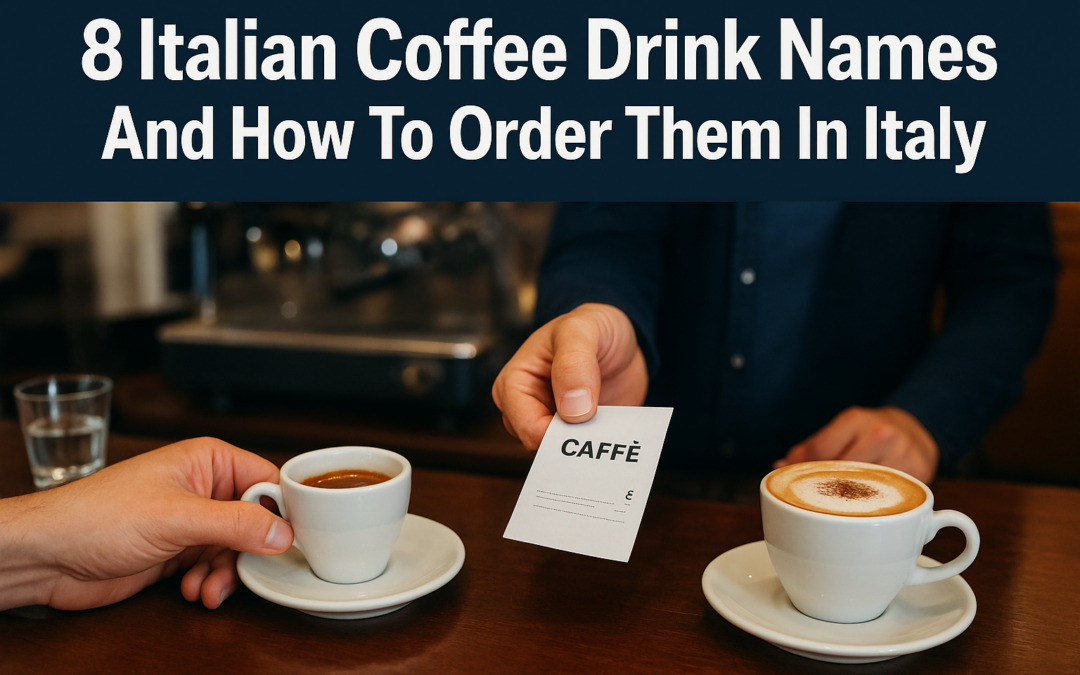
Walking into a coffee bar in Italy for the first time can be equal parts thrilling and intimidating. You scan the menu, hear locals rattling off orders in rapid Italian, and suddenly "I’ll have a coffee" doesn’t feel like enough. Knowing the right Italian coffee drink names before you go makes the difference between confidently stepping up to the bar and awkwardly pointing at what the person next to you ordered. At La Dolce Vita Cucina, our kitchen in Chicago’s Portage Park neighborhood is rooted in authentic Italian food and culture, and coffee is a massive part of that culture.
Italian coffee isn’t just a caffeine delivery system. It follows unwritten rules that locals take seriously, from what you drink in the morning to what you’d never order after noon. Understanding these drinks helps you appreciate the intention behind each one, whether you’re planning a trip to Rome or simply want to sound like you know what you’re talking about at an Italian dinner table.
This guide breaks down eight classic Italian coffee drinks, what’s actually in them, and how to order each one without missing a beat. Consider it your espresso-sized crash course in one of Italy’s proudest everyday traditions, no barista certification required, just a little curiosity and a good palate.
1. Caffè
When Italians say "caffè," they mean a single shot of espresso pulled into a small ceramic cup. This is the foundation of every Italian coffee drink name you will encounter at a bar in Italy. Understanding caffè first gives you the baseline for everything else on this list, because nearly every other drink builds on or modifies this one core preparation.
What it is and what you’ll get
A caffè is approximately 25 to 30ml of espresso extracted under high pressure from finely ground coffee. The result is a small, intensely flavored shot with a layer of reddish-brown crema sitting on top. You drink it in two or three sips, standing at the bar. The flavor is bold, slightly bitter, and rich, nothing like the thin, watered-down drip coffee that dominates most American diners and convenience stores.
In Italy, espresso and caffè refer to the same drink. Ordering a "caffè" signals to locals that you understand the culture, while asking for an "espresso" still works but marks you as a tourist.
When Italians order it
Italians drink caffè throughout the day, but consumption peaks after meals as a digestive ritual. You will watch locals knock one back quickly after both lunch and dinner without a second thought. Unlike in the US, where coffee often arrives alongside food, in Italy it almost always follows the meal. Morning caffè is equally common, frequently paired with a cornetto at the bar before work.
How to order it in Italian
Walk up to the bar, make eye contact with the barista, and say "Un caffè, per favore" (one coffee, please). That is all you need. Many Italian bars require you to pay at the cassa (cashier) first, then hand your receipt to the barista. Smaller neighborhood bars sometimes handle payment directly at the bar, so watch what other customers do before you approach.
What to watch for
Sugar is the main variable that catches visitors off guard. Italians frequently add a spoonful of sugar into the small cup and stir it rapidly before drinking. You are not required to follow suit, but expect the person beside you to do it automatically. Beyond sugar, drink it promptly: a proper caffè arrives hot but not scalding, and it loses its flavor and crema quickly once it sits.
2. Caffè ristretto
If caffè is the baseline of Italian coffee drink names, ristretto is its more concentrated cousin. The word "ristretto" means restricted in Italian, which describes the drink precisely: the same finely ground coffee pulled with significantly less water, producing a smaller and more intense result.
What it is and how it tastes
A ristretto uses roughly 15 to 20ml of water instead of the standard 25 to 30ml used for a caffè. Because extraction stops earlier, you get a shot that is sweeter and less bitter than regular espresso, with the harsher, sharper compounds left behind in the grounds. The texture feels thicker and more syrupy, and the flavor hits directly without the slight edge that a full espresso can carry.
Many experienced coffee drinkers prefer ristretto because the shortened extraction pulls the sweeter notes first, before bitterness has a chance to build.
When to order it
Order a ristretto when you want maximum coffee flavor in minimal volume. It works well for people who find standard espresso slightly too sharp or acidic. Italians who drink several coffees throughout the day sometimes lean toward ristretto to keep intensity high without compounding bitterness with each cup.
How to order it in Italian
Step up to the bar and say "Un caffè ristretto, per favore." The barista will know exactly what to do. Follow the same cassa payment process you would use for a regular caffè.
What to watch for
Ristretto disappears in two sips maximum. Drink it while the crema is still intact on the surface, because it fades faster than it does on a standard shot. Do not let it sit on the counter while you check your phone.
3. Caffè lungo
Caffè lungo sits toward the longer end of the Italian coffee drink names spectrum. "Lungo" translates directly to "long" in Italian, which describes the extended extraction that produces a noticeably larger volume than a standard shot.
What it is and how it differs from Americano
A lungo uses the same dose of ground coffee as a regular caffè but pulls roughly 50 to 60ml of water through the grounds instead of the usual 25 to 30ml. The longer extraction draws more compounds from the coffee, creating a drink that is slightly more bitter but still far stronger than filtered coffee. An Americano takes a completely different approach, where a barista pulls a normal espresso and then pours hot water into a finished shot afterward. That distinction matters because a lungo’s extended extraction actually changes the chemical makeup of the drink, while an Americano simply adds dilution on top of an already completed pull.
A lungo is not a diluted espresso. The bitterness you taste comes from the longer extraction itself, not from added water.
When to order it
Order a lungo when you want more liquid in the cup without crossing into milk-based territory. It suits you if a standard caffè feels too small to satisfy but you still want to stay within the traditional bar format.
How to order it in Italian
Walk up to the bar and say "Un caffè lungo, per favore." If the bar uses the cassa payment system, settle your bill first before approaching the barista with your receipt.
What to watch for
A lungo extracts more bitter compounds than a ristretto or standard caffè. Drink it quickly before it cools, because bitterness becomes noticeably more pronounced as the temperature drops.
4. Cappuccino
Cappuccino is probably the most recognized of all Italian coffee drink names outside Italy, yet it is also one of the most frequently misunderstood. The version you know from US coffee chains and the drink a barista hands you in Milan are often very different things.
What it is and what it contains
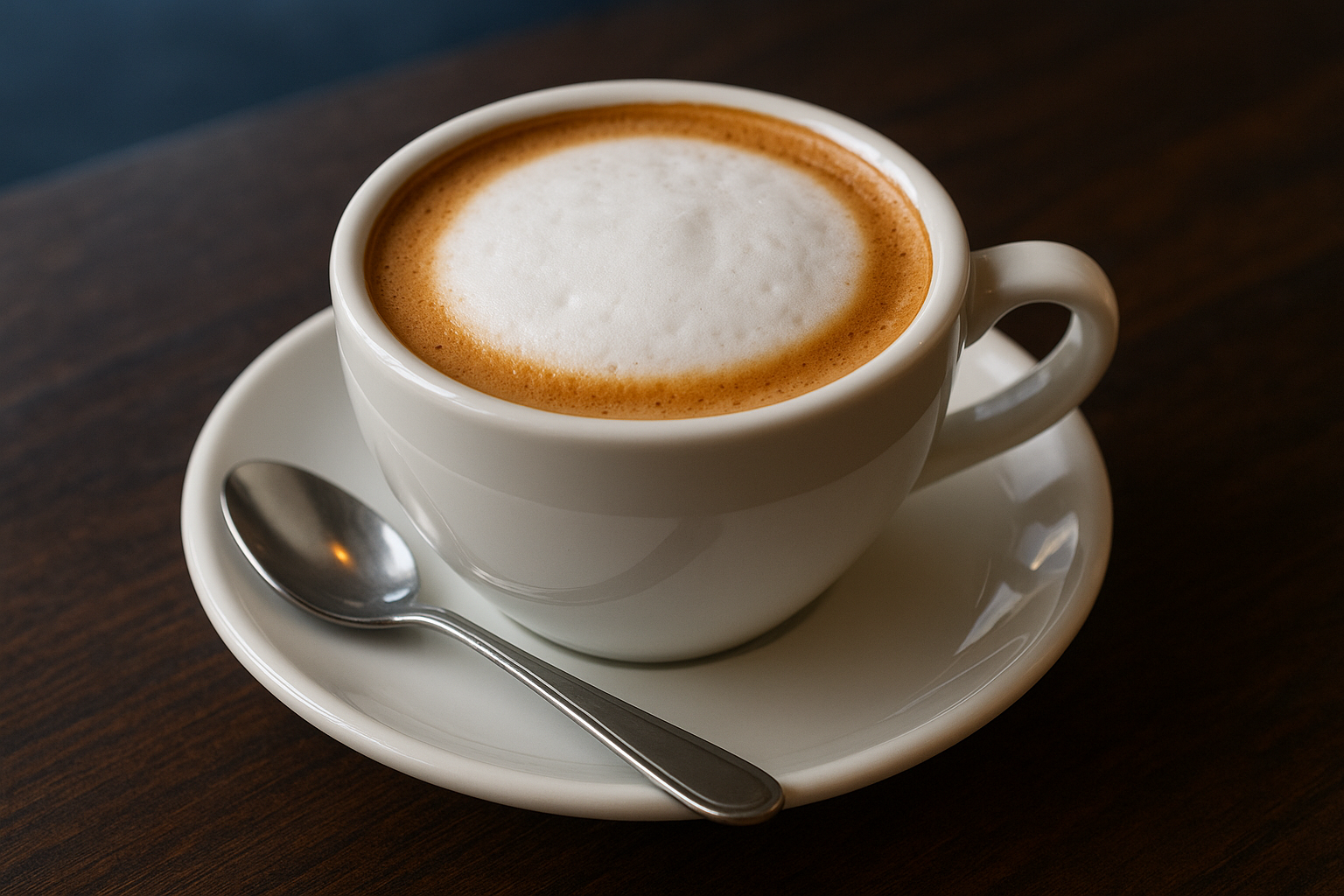
A proper Italian cappuccino combines one shot of espresso with steamed milk and a layer of thick milk foam in a ceramic cup of roughly 150ml. Italian baristas steam milk to around 60 to 65 degrees Celsius, which produces a dense, velvety texture rather than large, airy bubbles.
The foam should be thick enough that a spoonful of sugar briefly rests on the surface before slowly sinking through.
When to order it in Italy
Italians drink cappuccino at breakfast only, paired with a cornetto or pastry at the bar. Ordering one after noon marks you as a tourist immediately, and locals follow this unwritten rule without exception. You will not offend anyone by breaking it, but sticking to the morning-only convention shows genuine respect for Italian coffee culture.
How to order it in Italian
Walk up to the bar and say "Un cappuccino, per favore." If the bar uses the cassa payment system, settle the bill at the cashier first and then bring your receipt to the barista. No extra instructions are needed beyond the name.
What to watch for
Italian cappuccinos are smaller and stronger than the oversized versions common in American chains, with no flavored syrups included by default. The barista will serve yours in a pre-warmed ceramic cup, so drink it promptly while the foam holds its shape.
5. Caffè macchiato
Caffè macchiato is one of the more nuanced Italian coffee drink names you will encounter, and it translates directly to "stained coffee." The name refers to the small amount of milk that marks or stains the espresso, creating a drink that sits firmly between a straight shot and any full milk-based preparation.
What it is and the milk options you may hear
A caffè macchiato starts with a single espresso shot in a small cup, finished with just a splash of steamed or cold milk. You may hear baristas or locals specify "macchiato caldo" (hot, with steamed milk foam) or "macchiato freddo" (cold, with a small pour of cold milk). The caldo version is far more common in Italian bars, and the milk used is minimal enough that the espresso flavor stays dominant throughout.
A caffè macchiato is not the oversized caramel-layered drink that US chains sell under a similar name. The Italian version is small, sharp, and milk-forward only in the lightest sense.
When to order it
Order a macchiato when you want a standard caffè with a slightly softer edge. Italians who find straight espresso too sharp without wanting to abandon its intensity often reach for this version as their everyday bar choice.
How to order it in Italian
Say "Un caffè macchiato, per favore" at the bar. If you prefer the cold milk version, add "freddo" at the end to make that clear to the barista.
What to watch for
The cup arrives small and hot, so drink it before the crema fades. Do not expect a meaningful pour of milk; the macchiato is designed to soften, not transform, the underlying espresso.
6. Caffè latte
Caffè latte sits among the most misunderstood of all Italian coffee drink names, largely because the American version has drifted so far from what Italians actually drink. In Italy, a caffè latte is not a specialty coffee drink. It is a simple, everyday morning beverage built from espresso and a generous pour of warm milk.
What it is and how it’s served in Italy
A caffè latte combines one shot of espresso with a large amount of steamed milk, typically served in a glass or a wide bowl-shaped cup rather than the tall takeaway cups common in the US. Italian bars keep the ratio milk-heavy, with the espresso present for flavor but not dominant in the way it is in a cappuccino. There is minimal to no foam on top, making it noticeably softer and smoother.
Italians often drink caffè latte at home in the morning, poured from a stovetop moka pot into a large cup, making it one of the most domestic of all Italian coffee preparations.
When to order it
Order a caffè latte strictly in the morning, following the same unwritten rule that governs cappuccino. Italians treat milk-heavy coffee drinks as breakfast-only territory, and this one is no exception.
How to order it in Italian
Say "Un caffè latte, per favore" at the bar. Pay at the cassa first if the bar uses that system, then hand your receipt to the barista.
What to watch for
Expect your drink to arrive in a glass rather than a ceramic cup in many Italian bars. The generous milk volume means the drink cools faster than a standard caffè, so drink it while it is still warm.
7. Caffè shakerato
Caffè shakerato stands out among Italian coffee drink names as the one drink that genuinely surprises visitors who expect Italian coffee culture to be all about heat and brevity. This is Italy’s answer to iced coffee, and it looks nothing like the cold brews or iced lattes you encounter at American chains.
What it is and how bars make it
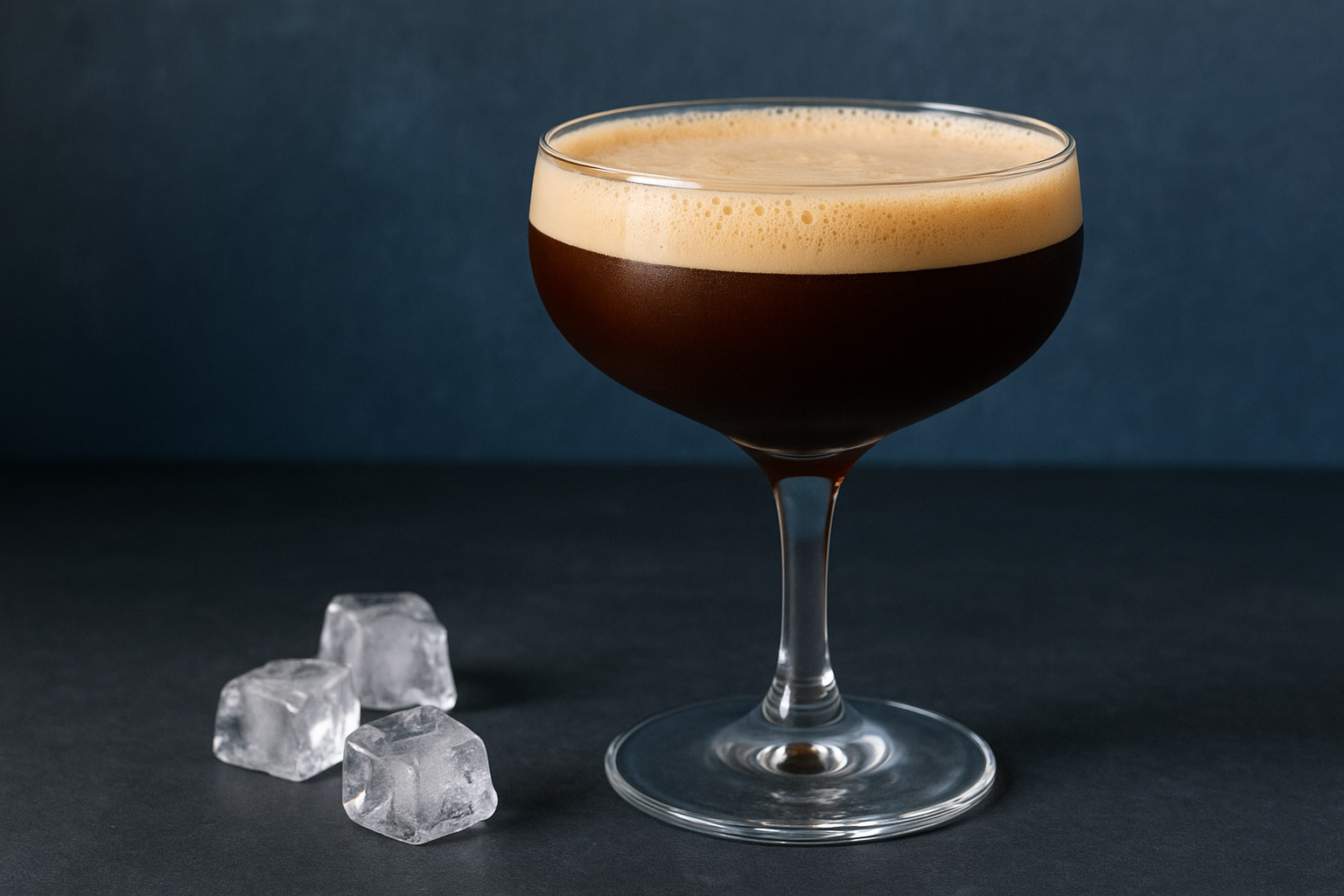
A caffè shakerato starts with one or two shots of espresso poured directly into a cocktail shaker with ice and sugar. The barista shakes it vigorously for several seconds, then strains the result into a chilled cocktail glass or coupe. The shaking chills the espresso rapidly while creating a thick, frothy layer on top from the agitated crema. Some bars add a splash of simple syrup or light flavoring, but the classic version uses only espresso, ice, and sugar.
The foam on a well-made shakerato should hold for at least a minute, which signals that the barista gave it a proper shake rather than a half-hearted rattle.
When to order it
Order a caffè shakerato during the summer months when standing at a hot bar and drinking a piping-hot espresso sounds unappealing. Italians embrace this drink from late spring through early fall as a refreshing afternoon option that still delivers a genuine espresso hit.
How to order it in Italian
Say "Un caffè shakerato, per favore" at the bar. If the bar uses the cassa payment system, settle your bill first before approaching the barista with your receipt.
What to watch for
Your drink arrives in a stemmed cocktail glass, not a ceramic cup. Drink it quickly because the foam and chill fade fast once the ice stops doing its job.
8. Caffè corretto
Caffè corretto closes out this list of Italian coffee drink names as the one option that adds a small but deliberate alcoholic twist to the standard espresso. The word "corretto" means "corrected" in Italian, and the name suggests that the shot of spirits fixes or improves the coffee in some way.
What it is and common spirits used
A caffè corretto is a standard espresso shot with a small measure of spirit added directly to the cup. The most common choices are grappa, sambuca, or brandy, though regional preferences vary across Italy. Grappa remains the traditional selection in northern Italy, while sambuca shows up frequently in central and southern regions.
The spirit amount is small, typically just a splash, so the espresso flavor stays at the front and the alcohol acts as a quiet addition rather than a takeover.
When to order it
Italians most commonly order a caffè corretto after a heavy meal, treating it as both a digestive and a small indulgence. You will see it ordered most often at lunch or dinner, making it a fitting end to a long sit-down meal.
How to order it in Italian
Say "Un caffè corretto, per favore" at the bar. If you want a specific spirit, add the name directly: "corretto con grappa" or "corretto con sambuca." Use the cassa payment system if the bar requires it before approaching the barista.
What to watch for
Your drink arrives in a small espresso cup, so drink it while the coffee is still hot. The spirit evaporates quickly in warm liquid, meaning the flavor softens the longer you wait.
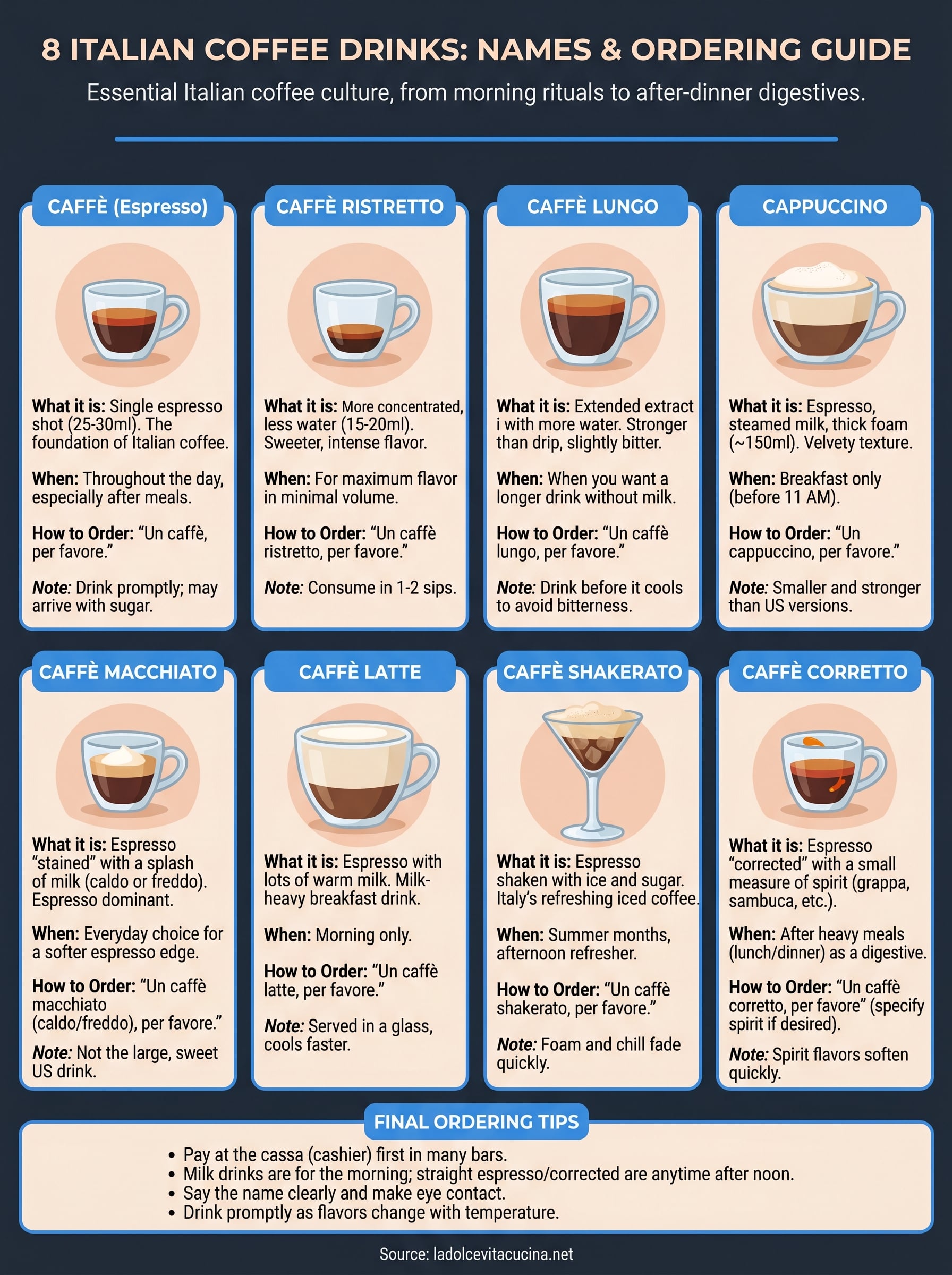
Final ordering tips
You now have a working knowledge of eight Italian coffee drink names that cover every occasion from a quick morning stop to an after-dinner indulgence. The single most useful habit you can build is paying at the cassa first in any bar that uses one, then bringing your receipt to the barista. Beyond that, follow the time-of-day rules: milk-heavy drinks belong in the morning, and straight espresso or corrected shots work any time after noon.
Confidence matters more than perfect pronunciation when you step up to the bar. Say the name clearly, make eye contact, and the barista will handle the rest. Drink whatever arrives promptly, because every drink on this list loses something when it sits and cools. If you want to keep exploring Italian food and drink culture closer to home, visit La Dolce Vita Cucina in Chicago’s Portage Park neighborhood and experience it firsthand at the table.