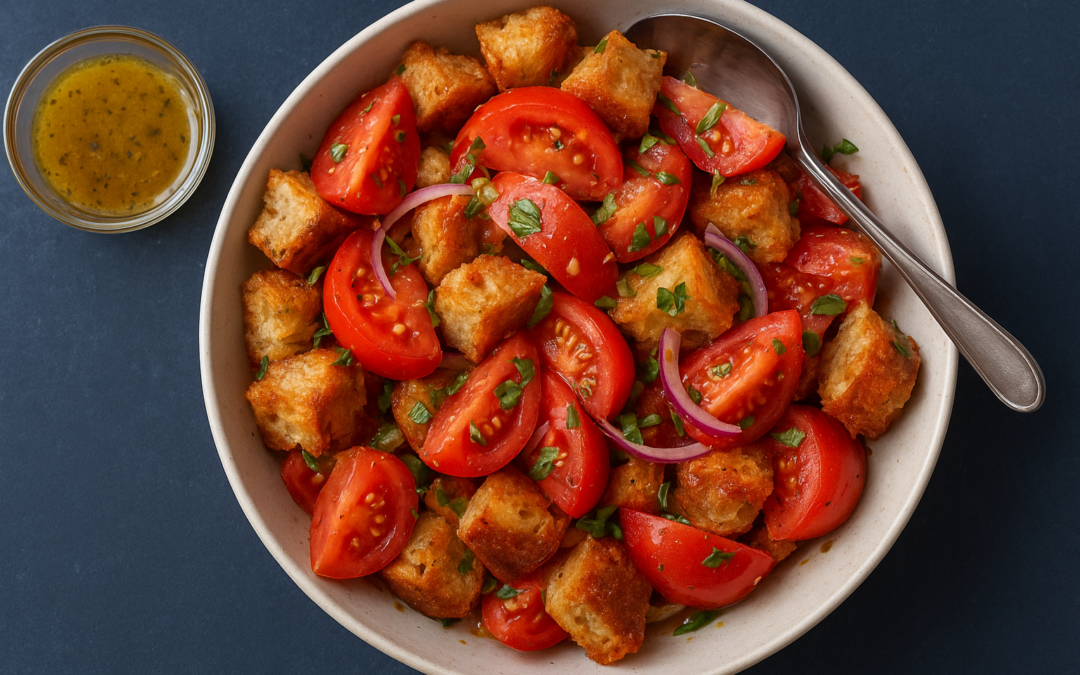
Panzanella is one of those Italian dishes that sounds almost too simple to be great, stale bread, ripe tomatoes, olive oil, and a few seasonings. But anyone who’s tasted a properly made version knows it’s one of summer’s most satisfying salads. The Serious Eats panzanella recipe, in particular, has become a go-to for home cooks because it nails the technique behind what makes this dish work: crispy, oil-toasted bread that holds its own against juicy tomatoes and a bright vinaigrette.
At La Dolce Vita Cucina, our kitchen in Chicago’s Portage Park neighborhood lives for dishes like this, the kind of straightforward Italian cooking where every ingredient earns its place. Panzanella shows up on our radar every summer, and we know firsthand how much the details matter. The bread, the tomatoes, the timing, get those right, and you’ve got something remarkable.
This guide breaks down the Serious Eats approach to panzanella step by step, covering the techniques that set it apart from lesser versions. You’ll learn why toasting the bread in olive oil changes everything, how to draw maximum flavor from peak-season tomatoes, and what to do so your salad doesn’t turn into a soggy mess. Whether you’re making this at home for the first time or refining a recipe you’ve attempted before, you’ll walk away with a panzanella worth repeating all summer long.
What makes the Serious Eats panzanella work
The classic Tuscan approach to panzanella used leftover stale bread soaked in water and squeezed dry before tossing with tomatoes. That method works in theory, but it often produces a salad with a mushy, dense bread texture that turns to paste within minutes of dressing. The Serious Eats panzanella method takes a fundamentally different stance: instead of softening the bread first, you drive out its moisture in the oven and coat it in olive oil, creating a porous, crispy structure that absorbs the dressing without disintegrating.
The core insight is that bread needs structural integrity before it meets the dressing, not hydration beforehand.
The bread problem most recipes get wrong
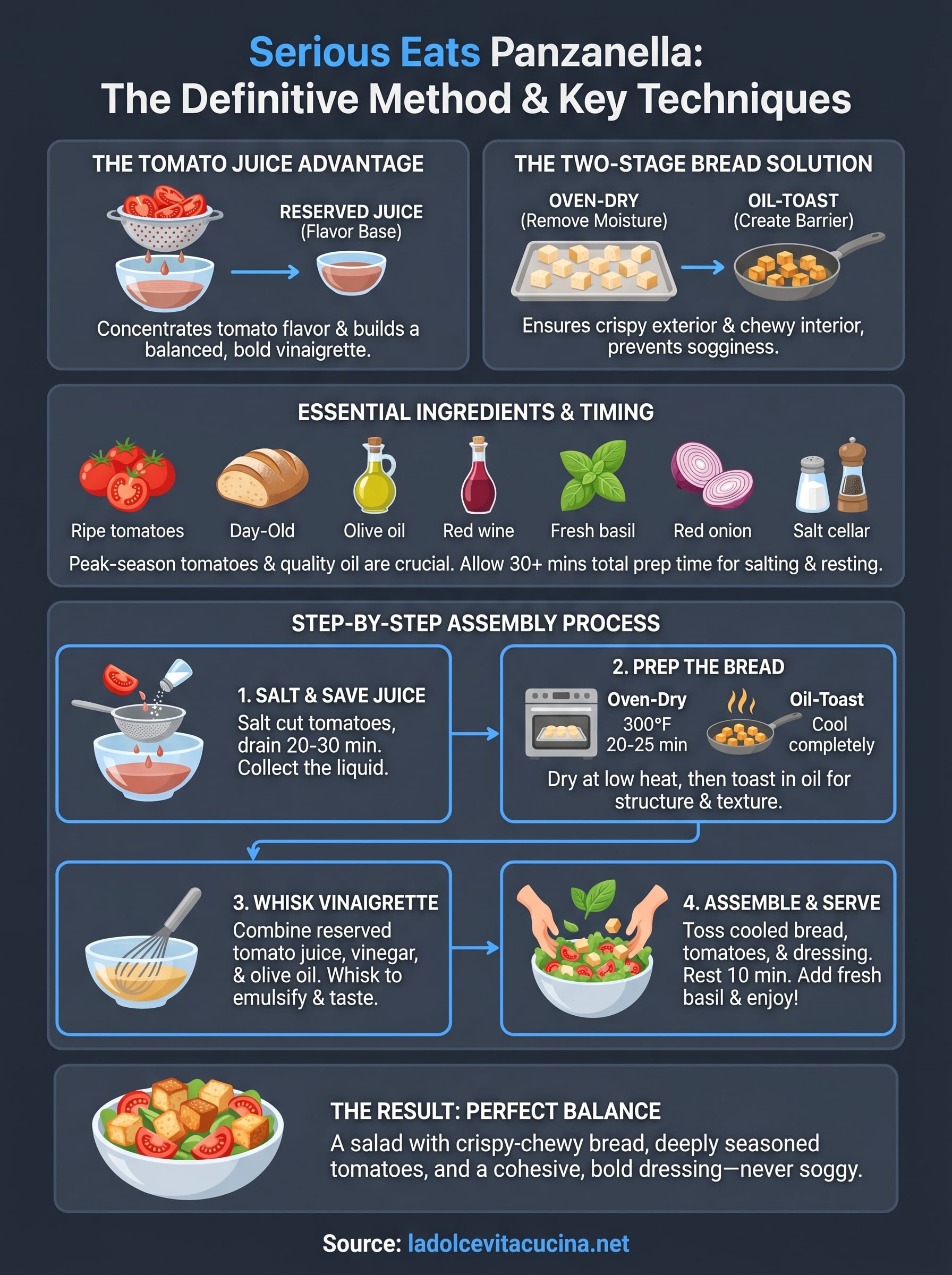
Most panzanella recipes leave you choosing between two bad outcomes: bread so dry it scrapes the roof of your mouth, or bread that absorbed too much liquid and turned into a dense clump. The Serious Eats technique sidesteps both by oven-drying cubed bread at a moderate temperature before toasting it in olive oil on the stovetop. This two-step process removes interior moisture while the oil coats every surface, acting as a barrier that slows liquid absorption so the bread softens just enough without going limp.
Your reward is a crouton-like cube that holds its shape for 20 to 30 minutes after you dress the salad. That window gives you time to plate and serve without rushing, which matters when you’re feeding more than two people. You also get a slightly chewy interior with a crisp outer layer, exactly the textural contrast that makes every bite satisfying rather than monotonous.
The tomato juice technique that builds the dressing
Salting tomatoes and letting them drain is standard in a lot of recipes, but what sets this approach apart is what you do with the collected juice. Instead of discarding that liquid, you whisk it directly into the vinaigrette. Tomato juice carries concentrated acidity and natural sweetness that neither red wine vinegar nor lemon juice can replicate. When you build the dressing around it, the entire salad tastes more cohesive because the bread, tomatoes, and vinaigrette all share the same flavor foundation.
Here is what the salting step accomplishes:
- Pulls moisture out of the tomatoes so their flavor concentrates rather than dilutes
- Reduces pooling liquid at the bottom of the bowl, keeping the texture consistent
- Creates a natural flavor base for the vinaigrette when combined with olive oil and vinegar
- Seasons the tomatoes internally rather than just coating the surface
Why the fat-to-acid ratio matters
The vinaigrette in this recipe runs close to a 3-to-1 ratio of olive oil to vinegar, with the reserved tomato juice filling in the rest. That balance produces a dressing bold enough to season the bread without overwhelming the tomatoes. Your goal when whisking is to taste and adjust with a small pinch of salt or a splash of extra vinegar if the tomatoes leaned sweet.
Keep in mind that the bread will mellow the dressing once everything comes together in the bowl. Aim for a slightly punchier flavor in the mixing bowl than you’d want on the finished plate, because the bread will absorb some of that sharpness and bring the whole salad into balance.
Ingredients and equipment checklist
Before you start the serious eats panzanella process, gather everything in one place. Having your ingredients prepped and your tools ready keeps the workflow clean, because once you salt the tomatoes, the clock starts and you want to move efficiently through each step.
Ingredients
Good panzanella lives or dies on ingredient quality, so this is not the recipe to make with underripe tomatoes or flavorless oil. Use peak-season tomatoes and a fruity, extra-virgin olive oil you enjoy tasting straight. Everything else on this list is easy to source.
Your tomatoes are the single most important ingredient here. Pick them up from a farmers market or a store where you can smell them before you buy.
| Ingredient | Amount | Notes |
|---|---|---|
| Ripe tomatoes | 2 lbs | Mixed varieties work well |
| Rustic bread (ciabatta or sourdough) | 12 oz | Day-old is ideal |
| Extra-virgin olive oil | 6 tablespoons | Divided between bread and dressing |
| Red wine vinegar | 2 tablespoons | Adjust to taste |
| Kosher salt | To taste | Use generously on tomatoes |
| Black pepper | To taste | Freshly ground |
| Fresh basil leaves | 1 large handful | Tear just before serving |
| Thinly sliced red onion | Half a small onion | Soak in cold water to mellow the bite |
| Cucumber (optional) | 1 small | Persian or English cucumber |
Equipment
You need just a handful of standard kitchen tools to make this recipe work. Nothing specialized is required, but a rimmed baking sheet is important for the oven-drying step because it catches any drips from the olive oil and prevents uneven toasting.
- Large mixing bowl for salting and tossing
- Rimmed baking sheet lined with parchment
- Large oven-safe skillet or sheet pan for stovetop toasting
- Fine mesh strainer or colander set over a bowl to collect tomato juice
- Whisk for building the vinaigrette
- Sharp knife and cutting board
- Measuring spoons for the vinegar and oil ratio
With your ingredients and tools assembled, you’re ready to move into the first step.
Step 1. Salt tomatoes and save the juice
Start this step at least 30 minutes before you plan to serve the salad. Salting the tomatoes early is what separates a well-built panzanella from one that pools with watery liquid at the bottom. This step is foundational to the serious eats panzanella method, and skipping or rushing it will cost you flavor and texture in every bite.
How to salt and drain your tomatoes
Cut your tomatoes into rough 1-inch chunks, removing the core but keeping the seeds and gel intact. That interior gel carries concentrated tomato flavor, and you want it to drain into the bowl rather than disappear onto your cutting board. Place the cut tomatoes in a fine mesh strainer set over a large bowl, season them generously with kosher salt, and toss to coat evenly.
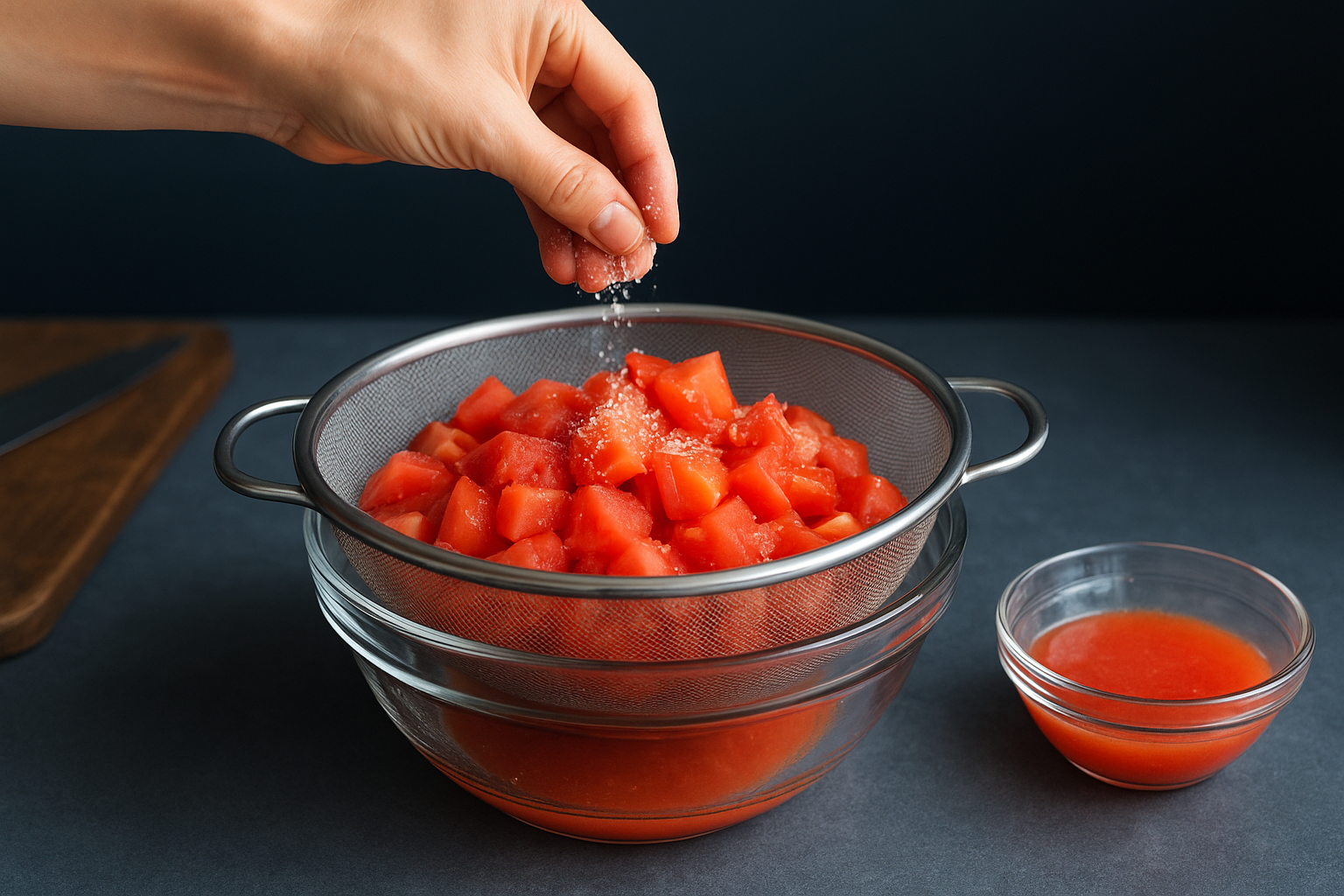
Use about half a teaspoon of kosher salt per pound of tomatoes, then taste one piece and adjust before walking away.
Let the tomatoes sit and drain for 20 to 30 minutes at room temperature. You’ll see liquid collect in the bowl below. Do not discard it. Here is what to expect during this process:
- The tomatoes will look slightly softened and glossy once the salt draws out moisture
- The collected juice will be bright, acidic, and deeply savory from the natural tomato sugars
- Larger tomato varieties release more liquid than cherry types, so adjust your resting time accordingly
- If your kitchen is hot, place the strainer setup in the refrigerator to keep the tomatoes fresh while they drain
Collecting and using the tomato juice
Once the tomatoes finish draining, pour the collected juice into a separate small bowl and set it aside. You will whisk this liquid directly into the vinaigrette in the final step. The juice already carries salt from the draining process, so taste it before adding more seasoning to the dressing later. This small habit prevents an over-salted final dish and keeps the whole salad balanced from the start.
Step 2. Oven-dry the bread for the right texture
While your tomatoes drain, preheat your oven to 300°F and prepare the bread. Cut your rustic loaf into rough 1-inch cubes, aiming for pieces that are irregular rather than perfectly uniform. Those uneven surfaces create more nooks to catch the dressing later, which makes every bite more flavorful. Spread the bread cubes in a single layer on your rimmed baking sheet without crowding them, so hot air circulates around each piece and removes moisture evenly.
Oven-drying at a lower temperature removes interior moisture without burning the outside, which is what gives the serious eats panzanella its signature chewy-yet-crisp texture.
Getting the bread dry without burning it
Slide the baking sheet into the oven and let the bread dry for 20 to 25 minutes, turning the cubes once halfway through. You’re looking for pieces that feel dry and noticeably light when you pick them up, with the exterior just beginning to firm. They should not be golden at this stage. That color comes from the stovetop step with olive oil. Pulling the bread while it’s still pale gives you full control over the final texture and ensures the cubes absorb oil evenly rather than in patches.
Toasting the bread in olive oil
Transfer the oven-dried cubes to a large heavy skillet over medium heat and add two to three tablespoons of extra-virgin olive oil. Toss the bread to coat every surface, then let the cubes sit undisturbed for one to two minutes per side until they develop a golden, lightly crisp exterior. Work in batches if your skillet is crowded, because too many pieces at once will trap steam and leave the bread soft instead of toasted.
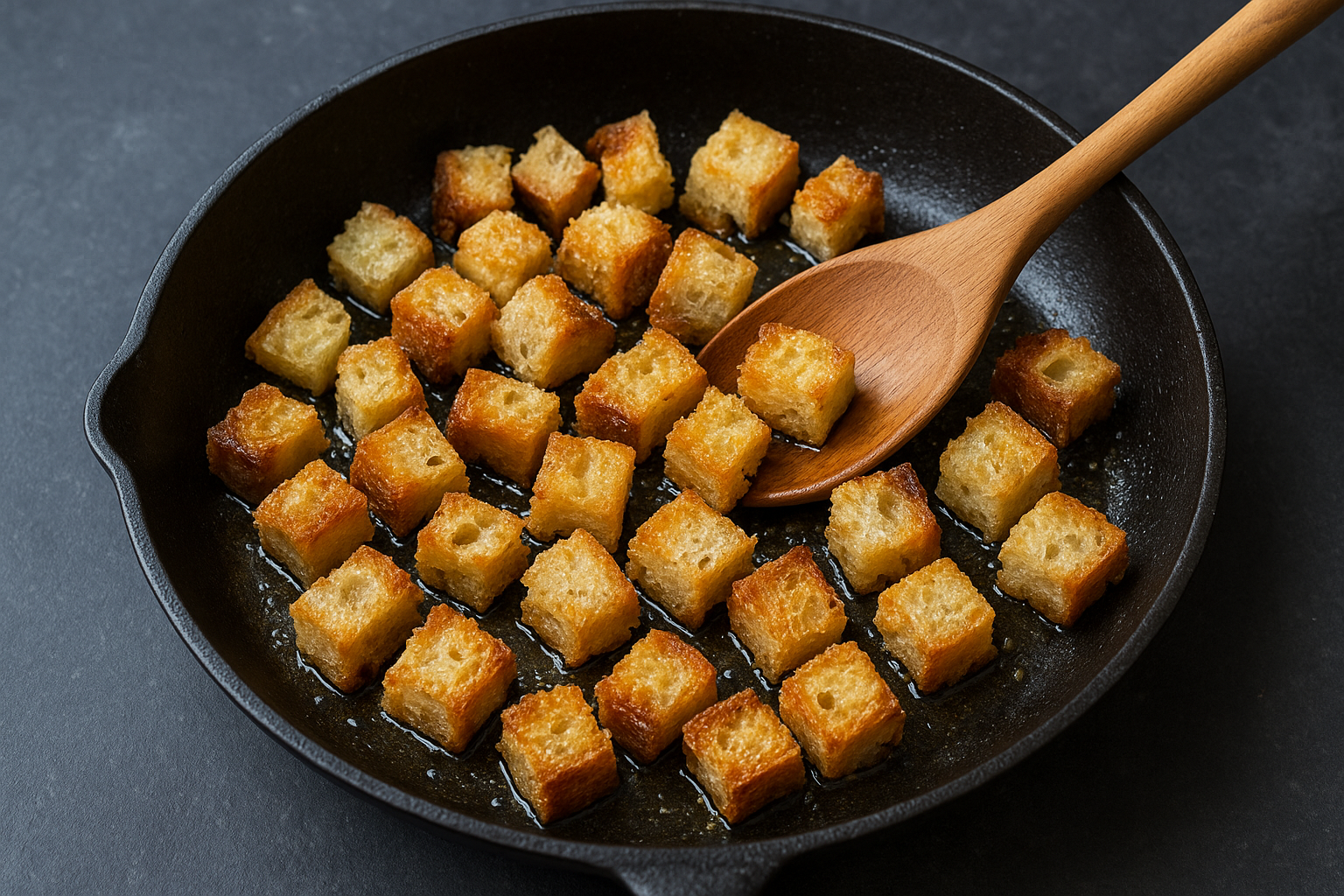
Once the cubes are golden, spread them on a clean sheet pan or cutting board and let them cool for five to ten minutes before you add them to the salad bowl. Warm bread soaks up dressing too aggressively and loses its structure. Cooling locks in the crisp exterior you built so the bread holds up once the vinaigrette hits it.
Step 3. Whisk the vinaigrette and assemble the salad
This is where the serious eats panzanella approach pays off. Every element you prepared in the previous steps, the concentrated tomato juice, the oil-toasted bread, and the seasoned tomato chunks, comes together into a single bowl. Move efficiently here, because the bread tastes best when it has 10 to 15 minutes to absorb the dressing before you serve it, not longer.
Building the vinaigrette with reserved tomato juice
Pour your reserved tomato juice into a small bowl and add two tablespoons of red wine vinegar. Whisk in four tablespoons of extra-virgin olive oil in a slow, steady stream until the dressing looks slightly emulsified and cohesive. Taste it directly at this stage and adjust with a small pinch of salt or an extra splash of vinegar if it needs more sharpness. Remember that the bread will absorb and mellow the dressing once everything combines, so the vinaigrette should taste noticeably bold before it hits the salad bowl.
The tomato juice is what gives this dressing its depth, so do not substitute water or skip the salting step that produces it.
Combining everything in the bowl
Add your cooled bread cubes to a large mixing bowl first, then layer the drained tomato pieces on top. Scatter the soaked red onion slices over the tomatoes, followed by cucumber slices if you’re using them. Pour the entire vinaigrette over the bowl and toss everything gently with your hands or two large spoons until each bread cube is coated and the tomatoes are evenly distributed throughout. Avoid aggressive tossing, which breaks the tomato pieces into smaller chunks and muddies the texture.
Let the assembled salad rest for 10 minutes at room temperature before serving. During that window, tear fresh basil leaves directly over the top and add a final drizzle of olive oil if you want extra richness. Check the seasoning one more time with a pinch of black pepper, then plate and serve immediately.
A simple finish
The serious eats panzanella method works because it respects what the dish actually needs: structurally sound bread, deeply flavored tomatoes, and a dressing built from the tomato juice itself rather than vinegar alone. Follow the steps in this guide and you will produce a salad that holds together on the plate, tastes balanced in every bite, and gives you a repeatable result every time peak-season tomatoes show up at your market.
Panzanella is a dish that rewards patience in the early steps and speed at the end. Salt your tomatoes early, cool your bread fully, and dress the salad just before you plan to eat it. Those three habits separate a forgettable version from one your guests will ask about.
If this style of thoughtful Italian cooking resonates with you, come experience it in person. Visit La Dolce Vita Cucina in Chicago’s Portage Park and taste what real Italian cooking looks like on the plate.